
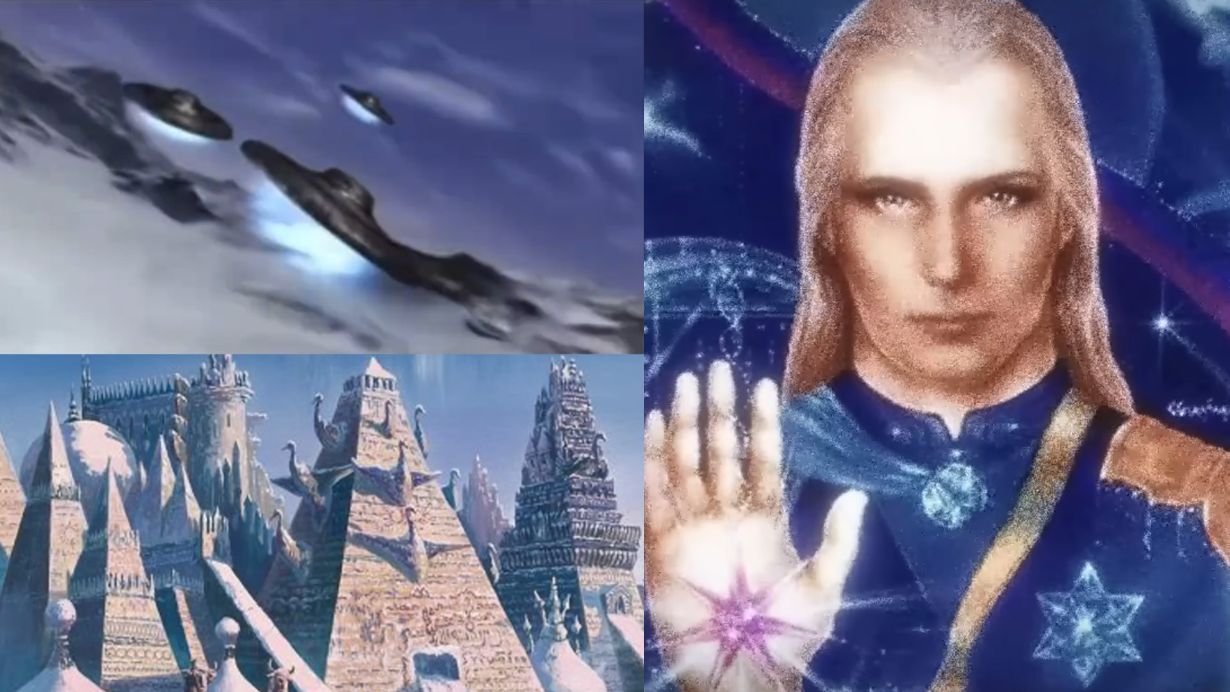
Agartha is a legendary underground kingdom that has fascinated conspiracy theorists, occult writers, and internet users for more than a century. Originally described as a secret civilization hidden beneath the Earth’s surface, the story has changed over time. What began as a mystical tale about a lost world eventually became part of online meme culture, where it is often mixed with Hollow Earth theories, UFOs, strange internet humor, and controversial political symbolism.
What Is Agartha?
Agartha, sometimes spelled Agharta or Agarttha, is a mythical kingdom believed by some fringe groups to exist inside the Earth. According to different versions of the legend, Agartha is home to an advanced civilization that possesses secret knowledge, powerful technology, and spiritual wisdom. The kingdom is often said to be located beneath Central Asia, Tibet, or the Himalayas.
The legend is closely connected to the Hollow Earth theory, a belief that the Earth contains vast hidden spaces or an entire inner world. While there is no scientific evidence supporting these claims, the idea became popular in occult and esoteric circles during the late 19th and early 20th centuries.
Origin of the Agartha Legend
The roots of Agartha can be traced back to French writer Louis Jacolliot. In his 1873 book Les fils de Dieu (“The Sons of God”), he wrote about an ancient place called Asgartha. Jacolliot claimed the story came from ancient Indian manuscripts, although historians generally believe he invented or heavily embellished the tale. His version described a lost ancient city rather than an underground kingdom.
The modern version of Agartha developed later through the writings of French occultist Alexandre Saint-Yves d’Alveydre. He expanded the story into a hidden subterranean civilization ruled by powerful spiritual leaders. In his writings, Agartha was portrayed as a technologically advanced society that secretly guided world events from below the Earth’s surface.
Also Read: Prolly Not Meme Meaning and Origin
Connection to the Hollow Earth Theory
As the story spread, Agartha became closely associated with Hollow Earth beliefs. Supporters of the theory claimed there were hidden entrances leading to the kingdom through remote locations such as the Himalayas, the Gobi Desert, Antarctica, or even the North and South Poles.
These claims were never supported by scientific evidence, but they became popular subjects in conspiracy books, occult literature, and science-fiction stories. Agartha gradually evolved into one of the most famous legends connected to hidden civilizations.
How Agartha Entered Internet Culture
In the 2020s, Agartha found a new audience online. Users on TikTok, Reddit, X, and other platforms began creating highly edited videos and memes featuring glowing underground cities, futuristic temples, UFOs, mysterious symbols, and fantasy landscapes. These posts often combined Agartha with other internet myths such as Hyperborea, Vril, and Hollow Earth theories.
Many of these memes were intentionally absurd and ironic, but some carried references to extremist or white supremacist mythology. Researchers and journalists have noted that Agartha-related content is sometimes used alongside coded symbols and conspiracy theories that originated in fringe online communities. Because of this, discussions about Agartha memes often include debates about whether the content is purely humorous or part of a broader ideological trend.
Also Read: Son I’m Crine Meme Origin and Meaning
Meaning of Agartha Memes
In modern meme culture, Agartha usually represents a fantasy world that is portrayed as mysterious, powerful, hidden, and separate from ordinary society. The memes often use dramatic music, surreal imagery, ancient architecture, UFOs, and exaggerated storytelling.
For many users, Agartha memes are simply part of internet “brainrot” humor, where random and bizarre concepts are mixed together for entertainment. Others view the memes as references to old occult myths and conspiracy theories. The meaning often depends on the community sharing the content and the context in which it appears.
Also Read: Big Yahu Meme Origin and Meaning The Viral Netanyahu Nickname
| Info | Details |
|---|---|
| Name | Agartha (also spelled Agharta, Agarttha, Agharti) |
| Type | Legendary underground kingdom |
| First Major Appearance | Louis Jacolliot’s 1873 book Les fils de Dieu |
| Original Name | Asgartha |
| Popularized By | Alexandre Saint-Yves d’Alveydre and later occult writers |
| Associated Theory | Hollow Earth theory |
| Common Locations | Central Asia, Tibet, Himalayas, underground Earth |
| Key Features | Advanced civilization, secret knowledge, hidden kingdom |
| Internet Popularity | Gained meme status during the 2020s |
| Common Meme Themes | UFOs, underground cities, Hyperborea, Vril, conspiracy theories |
| Scientific Evidence | None |
No. There is no scientific or archaeological evidence proving that Agartha exists. It is considered a myth, legend, or part of conspiracy folklore.
The modern legend is usually traced to 19th-century French writer Louis Jacolliot and later expanded by occultist Alexandre Saint-Yves d’Alveydre, who described Agartha as a secret underground civilization.
The Hollow Earth theory is the belief that the Earth contains large empty spaces or an entire world inside it. Agartha is one of the most famous locations associated with this theory.
Different versions of the legend place Agartha beneath Tibet, the Himalayas, Central Asia, the Gobi Desert, Antarctica, or near the Earth’s poles.