
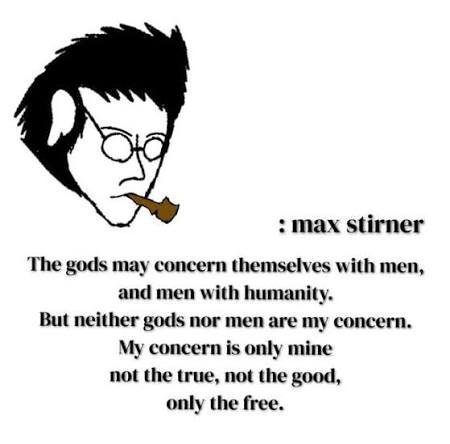
A German philosopher who died in 1856 has become an unlikely internet sensation. Max Stirner, known for his ideas about egoism and individual freedom, gained renewed popularity on TikTok, Instagram and X in November 2026. Social media users began sharing animated edits, funny portraits, fan art and even cosplay based on the philosopher.
While some users are genuinely interested in Stirner’s philosophy, others are simply enjoying the absurdity of turning a 19th-century thinker into an internet celebrity. The trend has also produced a female version of the philosopher known as Maxine Stirner.
Max Stirner Meme Meaning
The Max Stirner meme refers to a collection of internet jokes, video edits and illustrations based on German philosopher Max Stirner and his philosophy of egoism. Many of these memes make fun of social expectations, moral obligations and authority.
The main idea behind the meme is that individuals should not allow established beliefs or social rules to control their lives. Internet users often exaggerate this idea to joke about refusing responsibilities, rejecting authority or doing whatever they want.
Stirner’s distinctive round glasses, large forehead and side-profile portraits have also become recognizable features of the trend.
| Category | Details |
|---|---|
| Meme Name | Max Stirner |
| Real Name | Johann Caspar Schmidt |
| Date of Birth | October 25, 1806 |
| Date of Death | June 26, 1856 |
| Nationality | German |
| Known For | Philosophy of Egoism |
| Famous Book | The Ego and Its Own (1844) |
| Recent Viral Period | November 2026 |
| Early Viral TikTok Edit | November 4, 2026 |
| Popular Platforms | TikTok, Instagram Reels and X (Twitter) |
| Meme Type | Philosophy Memes, Video Edits and Fan Art |
| Related Terms | Egoism, Spooks and Maxine Stirner |
Who Was Max Stirner?
Max Stirner was the pen name of Johann Caspar Schmidt, a German philosopher born in Bayreuth on October 25, 1806. His ideas later influenced individualist anarchism and several other philosophical movements.
His best-known work, The Ego and Its Own, was published in 1844. In the book, Stirner questioned the power that religion, governments, political beliefs and moral systems held over individuals.
He argued that people should act according to their own interests instead of blindly following ideas imposed by society. However, his philosophy was more complex than simply encouraging selfish behaviour.
His radical views drew criticism from Karl Marx and Friedrich Engels, who discussed his philosophy at length in their work The German Ideology.
Also Read: Tiger Loaf Meme Origin and Meaning
Origin of the Max Stirner Meme
Max Stirner had already appeared in online political and philosophy memes during the 2010s. However, a new wave of interest emerged in November 2026, largely through short-form videos.
On November 4, 2026, TikTok user @grouwvy shared a video edit featuring an illustration of Stirner from the 1984 book Anarchy: A Graphic Guide. According to Know Your Meme, the video received more than one million views within three weeks.
On November 9, X user @Wane34565real shared several illustrations of Stirner, joking about how the philosopher was repeatedly shown from the same angle. The post attracted thousands of likes.
More creators soon joined the trend, producing animations, humorous artwork and videos inspired by Stirner’s appearance and beliefs.
Why Are Max Stirner Memes Popular?
Part of the humour comes from the contrast between Stirner’s serious philosophical ideas and the ridiculous situations in which internet users place him.
For example, someone might jokingly use Stirner’s philosophy to justify ignoring homework, refusing to attend a meeting or rejecting everyday responsibilities. These jokes turn complicated philosophical arguments into simple and relatable situations.
His recognizable portraits also make him an easy subject for animated edits and illustrations. Since there are no known photographs of Stirner, many modern depictions are based on historical sketches and later artwork.
Also Read: Jump Rope Toy Soldiers Meme Meaning and Origin
What Does Spook Mean in Max Stirner Memes?
The word “spook” is commonly associated with Stirner’s philosophy. It refers to an abstract idea or belief that people allow to gain power over their lives.
Stirner questioned whether concepts such as duty, morality and social status should have authority over an individual simply because society considers them important.
In internet memes, the term is often used more loosely. Users jokingly describe school rules, work schedules, responsibilities and other unwanted obligations as spooks.
The phrase “That’s a spook” has consequently become a humorous way of dismissing something that restricts personal freedom.
Who Is Maxine Stirner?
Maxine Stirner is a fictional, gender-swapped version of Max Stirner created by internet users. The character usually retains the philosopher’s recognizable glasses and hairstyle but is portrayed as a woman.
On November 14, 2026, TikTok user @wi_ci shared an edit that included a female depiction of Stirner. The video attracted more than 600,000 views in a little over a week.
Maxine Stirner is not a real historical figure. The character is an example of Rule 63, an internet convention in which users create gender-swapped versions of existing characters or public figures.
Also Read: Jupiter Incident 2011 Meme Meaning and Origin
Spread of the Max Stirner Meme
As the trend spread, users began dressing up as Stirner, creating animated videos and applying his philosophy to unrelated situations.
On November 16, 2026, TikTok creator @matheogoose posted a dancing video while dressed as the philosopher. The trend also inspired fan-made illustrations and animation memes involving egoism.
Although Stirner’s original writings are nearly two centuries old, the recent memes have introduced his name and philosophical ideas to a younger audience. For some, the trend is just another internet joke. For others, it has become a reason to explore philosophy for the first time.
The meme represents individual freedom, rejection of authority and questioning social expectations. Internet users often use his philosophy to humorously justify ignoring rules and responsibilities.
Max Stirner was a German philosopher whose real name was Johann Caspar Schmidt. He was born on October 25, 1806, and died on June 26, 1856.
Max Stirner is trending because of viral video edits, his distinctive appearance, humorous interpretations of egoism and fan-made characters such as Maxine Stirner.
A spook refers to an abstract belief or fixed idea that holds power over an individual. In memes, users jokingly describe unwanted rules, duties and social expectations as spooks.