
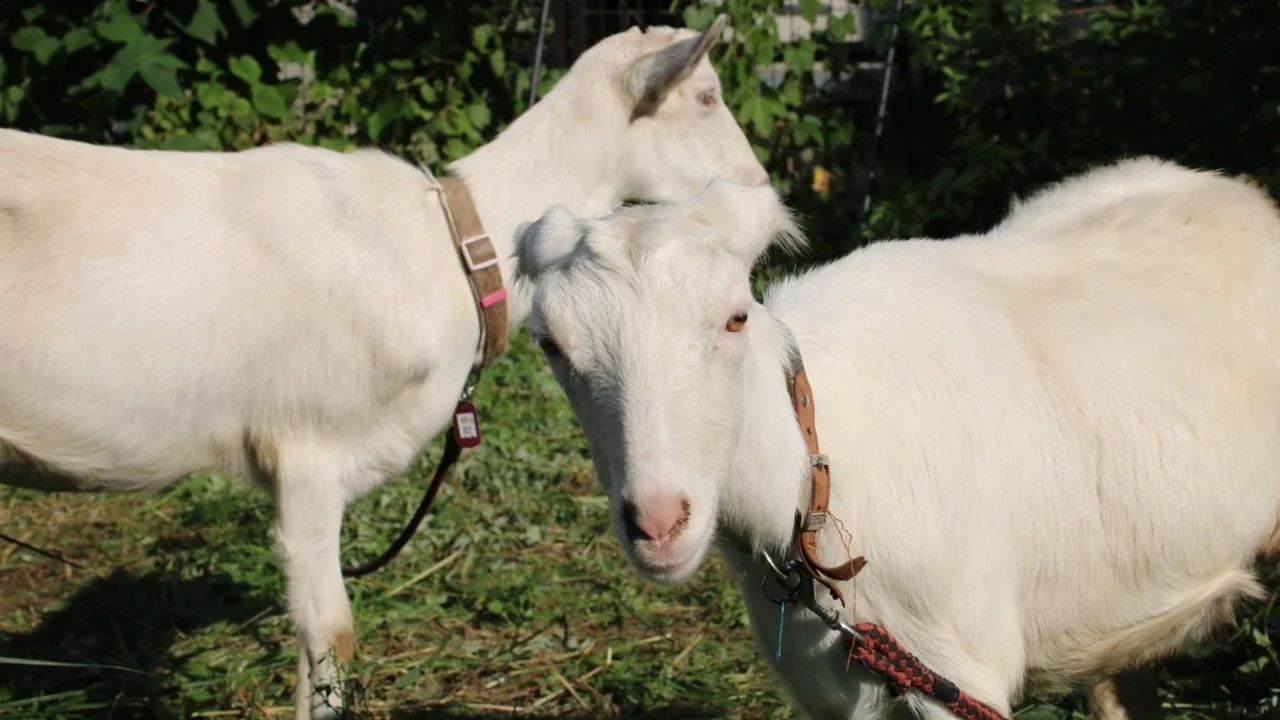
The Nagi and Pokke meme is a wholesome internet trend featuring two goats that were hired to eat overgrown grass near a train station in Tokyo, Japan. Their unusual job quickly caught people’s attention, turning an ordinary weed-clearing project into a viral story about two animal workers. Social media users began treating the goats like employees, coworkers and even railway mascots. The trend gained attention in October 2026 after videos of the pair spread across X (formerly Twitter) and Instagram.
What Is Nagi and Pokke Meme?
Nagi and Pokke are two real goats working at Yotsuya Station in Shinjuku, Tokyo. They were brought in by East Japan Railway Company (JR East) as part of a trial to clear weeds from a patch of land near the station.
The funny part is how people have reacted to their unusual assignment. Instead of seeing two goats simply eating grass, internet users started treating them like ordinary employees reporting for work. Their daily activities became a source of jokes about work shifts, office life and workplace relationships.
One popular joke is that Pokke is Nagi’s senior colleague because she is older than him. This inspired comparisons with the Japanese workplace terms “senpai” and “kohai,” which refer to a senior and a junior, respectively.
Nagi and Pokke Meme Origin
The story began in real life, not as a planned internet joke. According to Japanese news coverage, JR East started its goat-weeding trial on October 9, 2026, near the Akasaka Exit of Yotsuya Station. The goats were brought in to help manage overgrown vegetation on railway property.
A report published by SoraNews24 on October 20, 2026, introduced the two goats to a wider audience. Nagi-kun is a one-year-old male goat, while Pokke-chan is a two-year-old female goat.
The story gained further attention on October 21, when the X account @fuuuukatsu shared a Japanese television news clip showing the goats at work. The post attracted thousands of likes and millions of views, according to reports documenting the trend.
As the footage spread, people began sharing their own reactions. On October 22, X user @ren_Nevermind posted a video describing the goats as official JR mascots. That description helped fuel the joke, although the goats were actually hired for vegetation control rather than officially appointed as mascots.
Also Read: Ethan Klein Cheating Controversy Origin and Timeline
Why Did Nagi and Pokke Go Viral?
The popularity of Nagi and Pokke comes from a simple but amusing contrast. Tokyo is a busy urban environment filled with commuters, trains and office workers. Seeing two goats calmly eating grass beside a train station is unexpected, and the idea of animals having a regular job makes the situation even funnier.
Social media users also enjoy giving ordinary events a workplace storyline. Nagi and Pokke became easy subjects for jokes about clocking in, completing daily tasks and working alongside a more experienced colleague. Pokke’s age made the senior-junior comparison particularly appealing.
The story also has a wholesome side. Unlike memes built around controversy or arguments, the goats’ popularity comes from a real and relatively simple activity. Their videos offer a lighthearted break from the usual stream of online drama.
Are Nagi and Pokke Official JR East Mascots?
No. Although some social media posts described Nagi and Pokke as official railway mascots, that claim is misleading. Reports state that JR East arranged to use the goats for a trial vegetation-clearing project, paying for the services of their owners.
The mascot label is best understood as an internet joke rather than an official company announcement. Their growing popularity may make them familiar faces to commuters, but that does not mean JR East has formally designated them as mascots.
Also Read: Code Rot Filter Meme Meaning and Origin
How Long Will Nagi and Pokke Stay at Yotsuya Station?
According to SoraNews24, the goats were expected to remain at Yotsuya Station until the end of 2026. They would then take a winter break because grass grows more slowly during the colder months. They might return in spring if JR East needs their services again.
Visitors are also asked not to feed the goats snacks. Since their job is to eat the vegetation, extra treats could leave them too full to continue grazing.
Nagi and Pokke Meme Explained
At its heart, the Nagi and Pokke meme is about two goats with an unusually relatable job. Their real-life work inspired people to imagine them as employees, with Pokke playing the role of the experienced senior and Nagi as the younger colleague.
The trend shows how a small, unexpected moment can become an internet sensation. A practical railway maintenance trial turned into a lighthearted story that people could enjoy and share. For many viewers, the appeal is straightforward: two goats are doing their job, and the internet has decided to make them coworkers.
Also Read: Prime Yeat Meme Meaning and Origin
| Detail | Information |
|---|---|
| Meme name | Nagi and Pokke |
| Type | Animal meme and viral internet trend |
| Origin | Yotsuya Station, Shinjuku, Tokyo, Japan |
| Year | 2026 |
| Main subjects | Nagi-kun and Pokke-chan, two goats |
| Purpose | Eating overgrown grass as part of a vegetation-clearing trial |
| Railway company | East Japan Railway Company (JR East) |
| Trial began | October 9, 2026 |
| Viral spread | X (formerly Twitter) and Instagram |
| First widely shared news clip | October 21, 2026, shared by @fuuuukatsu on X |
| Popular joke | Pokke is Nagi’s senior coworker because she is older |
| Official mascots? | No. The mascot description is a social media joke. |
The Nagi and Pokke meme is a viral internet trend featuring two goats working near a Tokyo train station. Social media users joke about them as coworkers and railway employees.
Nagi and Pokke became popular because their unusual job attracted attention online. People found it funny to imagine the goats as employees with daily duties and workplace relationships.
Pokke is older than Nagi, which inspired social media users to compare them to senior and junior coworkers. The joke uses the Japanese terms senpai for a senior and kohai for a junior.
No. The goats were brought in to help clear vegetation near Yotsuya Station. Calling them official railway mascots is an internet joke, not a confirmed official designation.