
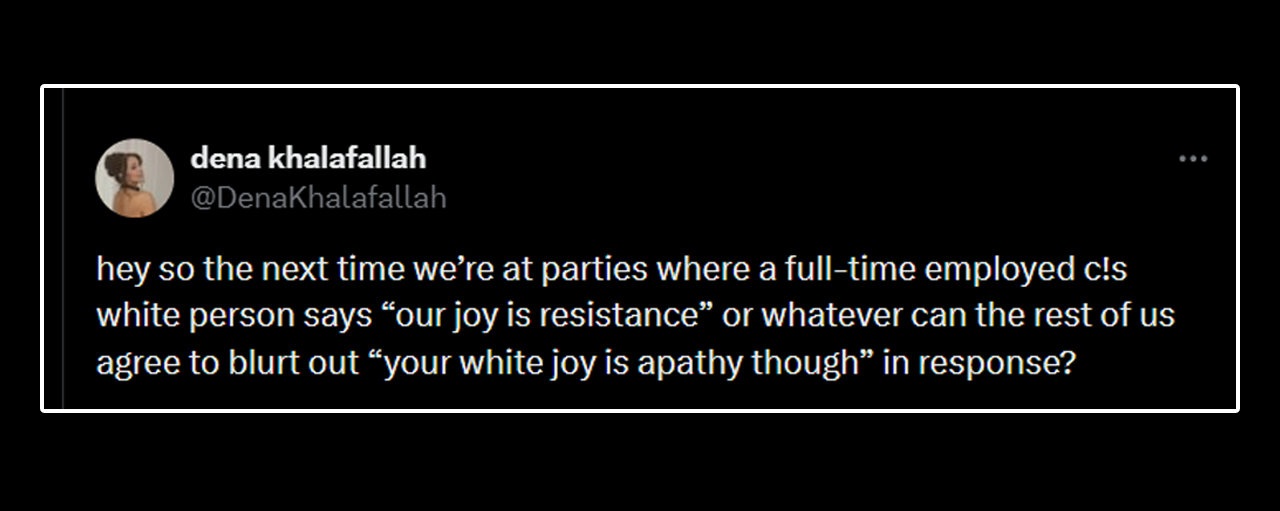
Our Joy Is Resistance / Your White Joy Is Apathy Though” became one of the most talked-about social media memes in May 2026 after a post on X (formerly Twitter) sparked widespread mockery, parody tweets, and reaction memes. The meme quickly spread because many users found the original scenario exaggerated, overly online, and disconnected from normal real-world conversations.
What Is the “Our Joy Is Resistance” Meme?
The meme centers around an X post by user Dena Khalafallah. In the post, the user imagined being at a party where someone says “our joy is resistance,” and suggested responding with the phrase “your white joy is apathy though.” The wording immediately caught attention because many people considered the imagined situation unrealistic and awkwardly political for a casual social setting.
Soon after the original tweet circulated, users across X began reposting and parodying it. Many jokes focused on how unusual it would be to hear people speaking this way at normal parties. Others mocked the tone as “chronically online,” meaning language shaped more by internet discourse than everyday interactions.
Origin of the Meme
The meme originated on May 2, 2026, when the original tweet was posted on X. According to Know Your Meme, the post gained millions of views within days and became heavily ratioed, meaning it received far more attention and criticism than support.
One of the earliest viral quote tweets joked:
“That classic situation when you’re at a party and someone says ‘Our joy is resistance.’”
This response helped transform the original statement into a meme template. People then started creating increasingly absurd examples involving birthday parties, text messages, and everyday conversations suddenly interrupted by the phrase “your white joy is apathy though.”
Also Read: You Found Lost Media or It’s Problematic Media Meme Meaning and Original
Why the Meme Went Viral
Several factors contributed to the meme’s rapid spread:
- The original wording sounded highly performative to many users.
- The imagined party scenario felt unrealistic and overly political.
- The phrase itself was dramatic and easy to parody.
- Social media users often turn awkward online discourse into ironic memes.
The meme also fits a larger trend where internet culture mocks overly academic or activist-style language when used in casual settings. Researchers studying online memes note that memes spread fastest when communities remix and reinterpret phrases in humorous ways.
Also Read: Hasan Piker Reading Lenin Meme Origin and Meaning
| Info | Details |
|---|---|
| Meme Name | Our Joy Is Resistance / Your White Joy Is Apathy Though |
| Origin Platform | X (formerly Twitter) |
| Origin Date | May 2, 2026 |
| Original Poster | Dena Khalafallah (@DenaKhalafallah) |
| Meme Type | Catchphrase / Reaction Meme |
| Why It Went Viral | Users mocked the unrealistic and overly online party scenario |
| Common Theme | Parody of performative political internet language |
| Popular Reactions | Quote tweets, ironic edits, birthday party jokes, fake conversations |
| Spread | Millions of views and reposts within days |
| Documented By | Know Your Meme |
Popular Meme Variations
Many viral versions of the meme exaggerated the original concept. Some examples included:
- Pretending toddlers at birthday parties discuss political theory.
- Text conversations where random comments are answered with “your white joy is apathy though.”
- Jokes about people imagining what “adult parties” are like.
Also Read: Spoony Spoonicus Meme Origin and Meaning
These edits and quote tweets helped the meme evolve from a single tweet into a recognizable internet catchphrase.
The phrase suggests that expressing happiness, celebration, or joy can itself be a form of resistance against oppression, negativity, or difficult social conditions.
The meme originated from a viral post on X (formerly Twitter) in May 2026. The post described a hypothetical party conversation involving the phrase “our joy is resistance.”
The meme spread because many users found the imagined party scenario unrealistic and overly dramatic. People began creating parody tweets and ironic reactions that quickly went viral.