
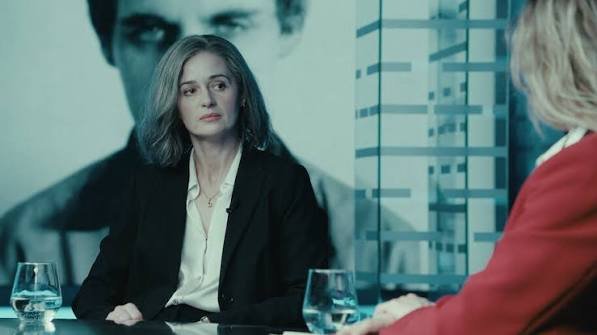
Netflix’s Polish crime drama The Law of Beasts explores this difficult question through a case that changed the country’s legal system. Released on November 18, 2026, the four-episode series follows two women whose friendship falls apart during a murder investigation in 1988. More than two decades later, the same criminal case brings them face to face again. This time, the fight is not about proving a man’s guilt. It is about whether the government has the right to keep him locked away after he has served his sentence.
Based on the real crimes of Mariusz Trynkiewicz, the series mixes historical events with fictional characters. Its ending is unsettling because the authorities get the result they want, but the question of whether they have done the right thing remains unanswered.
The Law of Beasts Season 1 Recap: What Happens in the Series?
The 1988 Murders That Shock Poland
The story begins with a terrible crime in Piotrków Trybunalski, Poland, in 1988. Four young boys are murdered, leaving their families devastated and the public demanding justice. Major Anna Bersz is assigned to investigate the case.
Anna is determined to catch the killer. She also feels personally responsible for making sure the victims’ families never have to fear him again.
The investigation leads to Mariusz Trynkiewicz, a physical education teacher. He becomes the main suspect, and the evidence against him leads to his conviction. However, the case raises another important question: Was he mentally responsible for his actions?
That question brings psychiatrist Agnieszka Grabska into the investigation. She is also Anna’s close friend, which makes their professional disagreement far more painful.
Anna and Agnieszka Disagree About the Killer
During her psychiatric examination, Agnieszka notices troubling signs in Trynkiewicz’s behavior. He describes memory problems and experiences that raise questions about his mental condition.
Agnieszka believes the assessment must be based on medical evidence, even if her findings are unpopular. Anna sees the situation differently. She fears that a finding of reduced criminal responsibility could prevent the punishment she believes the killer deserves.
The pressure grows as the authorities want the case resolved quickly. Anna pushes Agnieszka toward a conclusion that will support a severe sentence.
Eventually, Agnieszka signs an assessment supporting Trynkiewicz’s full criminal responsibility. The decision helps clear the way for a death sentence, but it damages her friendship with Anna.
For Anna, the verdict appears to be justice. For Agnieszka, it becomes a painful reminder of what happens when professional judgment is influenced by pressure.
Why Does Trynkiewicz Escape the Death Penalty?
Although Trynkiewicz receives a death sentence, Poland is undergoing major political changes. As the communist system comes to an end, an amnesty changes the fate of prisoners facing execution.
His death sentence is commuted to 25 years in prison.
This change creates a problem that Anna never expected. A man she believed would never leave prison now has a possible release date.
Anna cannot accept that outcome. She believes Trynkiewicz remains dangerous and promises to prevent him from returning to society.
But the law cannot simply punish someone again because people fear what he might do in the future.
2014: The Killer’s Release Creates a New Crisis
The story jumps forward to 2014. Trynkiewicz is approaching the end of his prison sentence, and his possible release causes widespread anger and fear.
Anna has become a powerful official in Poland’s prison system. Despite the years that have passed, she remains deeply affected by the murders and the promise she made to the victims’ families.
Agnieszka, meanwhile, is now a respected psychiatrist. The two women have followed different paths, but the approaching release forces them back into the same conflict.
Anna wants the government to find a legal way to keep Trynkiewicz confined. Agnieszka believes that his mental condition must be assessed fairly, without treating psychiatric medicine as another form of punishment.
Their disagreement is no longer just personal. It now involves politicians, lawyers, doctors, and the future of Poland’s justice system.
The Government Introduces the Beast Law
With public pressure increasing, lawmakers work on a new legal measure commonly called the Beast Law.
The law creates a way to place certain dangerous offenders in a secure treatment facility after they have completed their prison sentences. The government argues that this is necessary to protect the public from people who may commit serious crimes again.
Anna supports the measure because she believes the danger is real. She cannot bear the thought of another child becoming a victim.
Agnieszka sees a serious problem. If the state can continue confining someone after a sentence ends, where should that power stop?
The new law also faces opposition from legal professionals who question whether preventive detention respects basic rights.
While this political fight continues, Anna’s personal life shows the cost of her obsession with the case. Her strained relationship with her adult son, Kacper, suggests that her determination to protect other families has come at a price within her own home.
Also Read: Madden Recap and Ending Explained
| Details | Information |
|---|---|
| Series Name | The Law of Beasts |
| Original Title | Prawo bestii |
| Release Date | November 18, 2026 |
| Streaming Platform | Netflix |
| Country | Poland |
| Language | Polish |
| Genre | Crime, Drama, Psychological Thriller |
| Total Episodes | 4 |
| Director | Kasper Bajon |
| Writers | Kasper Bajon and Anna Kasińska |
| Main Cast | Agnieszka Grochowska, Agnieszka Żulewska, Michał Pawlik |
| Based On | The real case of Mariusz Trynkiewicz and Poland’s Beast Law |
The Law of Beasts Season 1 Ending Explained
What Happens During the Final Court Hearing?
The final episode brings the conflict between Anna and Agnieszka into the courtroom.
The authorities want to establish that Trynkiewicz remains dangerous enough to require confinement under the new law. A psychiatric assessment is important to that decision.
Anna hopes the evidence will support keeping him in custody. Agnieszka, however, refuses to shape her medical opinion around the outcome the government wants.
She does not deny the seriousness of Trynkiewicz’s condition or the danger he may present. Instead, she insists that a psychiatrist’s responsibility is to provide an honest assessment, not to help the state extend a punishment.
This moment brings the story back to 1988. Back then, Agnieszka gave in to pressure during the original investigation. Now she refuses to repeat that mistake.
Her testimony becomes an important personal decision, even though it does not determine the entire case.
Also Read: The Hunger Games Sunrise on the Reaping Movie Recap
Does Mariusz Trynkiewicz Get Released?
No, Trynkiewicz does not return to ordinary life as a free man.
The court ultimately orders his placement in the National Centre for the Prevention of Dissocial Behaviours in Gostynin, a secure institution established under the new legal framework.
This means that although his original prison sentence has ended, he remains confined under a separate preventive system.
Anna achieves the result she has spent years fighting for. The man responsible for the murders will not simply walk back into society.
However, the series does not present this as a happy ending. The court’s decision protects the public from a feared risk, but it also raises difficult questions about individual freedom and the limits of government power.
Agnieszka’s refusal to give a convenient medical opinion does not prevent the court from reaching its decision. Instead, it makes clear that the state must justify its actions through the legal process rather than demand the answer it wants from an expert.
Do Anna and Agnieszka Become Friends Again?
No. Their friendship is not repaired in the finale.
After the court proceedings, the two women leave the building and walk in opposite directions.
There is no emotional reunion or final conversation that makes everything right. The scene is quiet, but it says a great deal about what has happened between them.
Anna still believes that preventing another tragedy is worth fighting for. Agnieszka believes that justice loses its meaning when professionals abandon their principles to satisfy public anger.
Both women have spent years living with the consequences of the same crime. Yet neither can fully accept the other’s choices.
Their final separation shows that even when a legal case reaches an outcome, the personal damage it causes may never disappear.
Also Read: Campus Drivers Season 1 Recap and Ending Explained
What Does the Ending Really Mean?
The ending of The Law of Beasts is not simply about whether a murderer stays locked up. It is about the danger of allowing fear to decide how justice works.
Anna represents the need to protect innocent people. Her concern is understandable because the original murders were horrific, and the possibility of another crime cannot be ignored.
Agnieszka represents the need for fairness and independent medical judgment. She understands that even a hated criminal must be treated according to the law.
The problem is that both concerns matter.
If the government ignores a serious threat, innocent people may suffer. But if it creates rules that allow confinement based on predictions about future behavior, those rules may eventually affect others as well.
The court’s decision resolves the immediate danger without settling the wider debate.
That is why the final scene feels uncomfortable rather than satisfying. Anna gets what she wants, but she does not recover her friendship. Agnieszka stands by her principles, but she cannot undo what happened in 1988.
The series leaves viewers with a difficult question: Can a country protect its citizens without weakening the rights that its legal system is meant to defend?
Is The Law of Beasts Based on a True Story?
Yes. The series takes inspiration from the real case of Mariusz Trynkiewicz, who murdered four boys in Poland in 1988.
Trynkiewicz was sentenced to death, but political and legal changes led to the sentence being replaced with 25 years in prison. His approaching release later became part of a national debate over how to deal with offenders considered dangerous after completing their sentences.
Poland introduced legislation commonly known as the Beast Law, which provided a legal framework for preventive measures involving certain high-risk individuals.
However, Anna Bersz and Agnieszka Grabska are fictional characters. Their friendship and personal conflict were created for the series to explore the moral questions surrounding the real events.
The show is therefore a historical crime drama rather than a scene-by-scene documentary.
Also Read: Being Heumann Recap and Ending Explained
The Law of Beasts Season 1 Review: Is It Worth Watching?
The Law of Beasts is different from crime thrillers that depend on sudden twists, violent scenes, or the search for a hidden killer. The criminal’s identity is not the central mystery. The real tension comes from watching people struggle with decisions that have no simple answers.
Agnieszka Grochowska gives Anna a determined but troubled personality, while Agnieszka Żulewska makes the psychiatrist’s conflict feel believable. Michał Pawlik’s quiet performance as Trynkiewicz is disturbing without relying on exaggerated behavior.
The series can feel slow at times, especially when characters spend long scenes discussing legal and medical questions. Some personal storylines, including Anna’s relationship with her son, could have received more attention.
Still, the four-episode format keeps the main conflict focused. Rather than offering an easy victory, the series shows how a single criminal case can shape public opinion, personal relationships, and even national law.
Yes, The Law of Beasts is inspired by the real crimes of Mariusz Trynkiewicz, a Polish serial killer convicted of murdering four boys in 1988. However, the series includes fictional characters and dramatized events to explore the legal and moral questions surrounding the case.
No. Trynkiewicz does not return to ordinary life as a free man. After completing his prison sentence, he is placed in a secure facility because the authorities consider him a continuing danger to society.
Trynkiewicz originally received a death sentence for the murders. However, political and legal changes in Poland led to his sentence being commuted to 25 years in prison. This decision later created controversy when his release date approached.
Anna and Agnieszka disagree over the psychiatric assessment of Trynkiewicz. Anna believes protecting society should come first, while Agnieszka insists that medical opinions must remain independent of political pressure. Their disagreement damages their friendship and continues for more than two decades.