
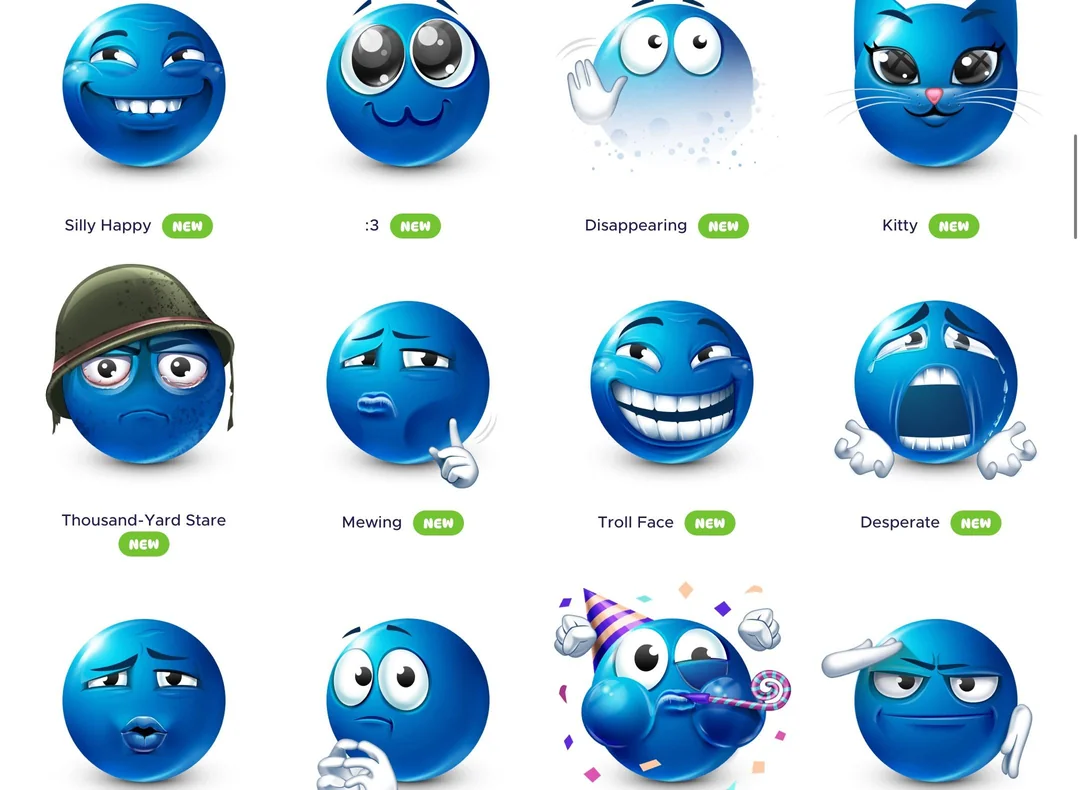
Blue Emoji often called Bluemoji started as a set of custom blue smiley stickers eventually turned into a viral meme format used across social media platforms. Today, images such as the cookie-eating blue emoji and the laughing blue emoji are widely used to express awkwardness, amusement, sarcasm, and playful reactions online.
What Does the Blue Emoji Mean?
The Blue Emoji does not have a single fixed meaning. Instead, different stickers from the collection represent different emotions and reactions. Internet users often use them as visual responses in conversations, much like GIFs or reaction images. The most popular versions include the cookie-eating emoji, which is commonly used to express awkward amusement or watching drama unfold, and the hand-over-mouth emoji, which is used to signal laughter, mischief, or trying not to laugh.
Because of their exaggerated facial expressions, the blue emojis became a flexible language of internet humor. Users often add captions to the images, turning them into memes that fit a wide range of situations.
| Category | Details |
|---|---|
| Name | Blue Emoji (Bluemoji) |
| Type | Custom emoji and reaction image meme |
| Original Creator | Tanya Mau (LazyMau) |
| Original Release | 2009 |
| First Platform | DeviantArt |
| Origin Country | Latvia |
| Viral Period | 2021–2022 |
| Most Popular Variants | Cookie Muncher, Holding It In, Uncomfortable Smile |
| Primary Use | Reaction images, memes, social media replies |
Also Read: Paul Revere The British Are Coming Meme Meaning and Origin
Origin of the Blue Emoji
The story of the Blue Emoji began in November 2009 when Latvian artist Tanya Mau uploaded a collection called “Very Emotional Emoticons” to DeviantArt. The artwork featured 40 blue smiley characters showing a wide range of emotions, from happiness and excitement to confusion and anger. The illustrations quickly attracted attention and received thousands of views from users looking for expressive digital stickers.
In 2011, the artist released a second collection that expanded the series with even more emotional expressions. Over time, the images spread beyond DeviantArt and were shared on various websites and social platforms. The growing collection helped establish the distinctive visual style that people now recognize as Bluemoji.
Also Read: Here’s Johnny Meme Meaning and Origin
How the Meme Spread Online
The blue emojis gained broader exposure when they were reposted on emoji and sticker-sharing websites. By 2016, the stickers were circulating on Facebook and messaging platforms, where users adopted them as expressive reactions. Several of the images became especially popular because they perfectly captured emotions that standard emojis could not.
The cookie-eating emoji emerged as a favorite reaction image. People used it when observing online arguments, controversies, or embarrassing situations from the sidelines. Another popular version, showing the emoji covering its mouth while laughing, became a common way to react to jokes and memes.
The Viral Explosion in 2021 and 2022
Although the sticker pack had existed for years, its biggest breakthrough came in 2021. Twitter users began sharing the cookie-eating emoji as a reaction image, and meme creators soon started adding captions to the character. One early viral example used the emoji in a joke about spreading misinformation online.
As the trend grew, TikTok users incorporated the blue emojis into videos, edits, and meme compilations. Their popularity expanded rapidly across Twitter, TikTok, iFunny, Discord communities, and other social media platforms. By early 2022, Bluemoji had become a mainstream meme format recognized by millions of internet users.
Also Read: Du Bist Gut Genug Meme Meaning and Origin
Why People Love the Blue Emoji
The success of Bluemoji comes from its exaggerated and highly expressive design. Unlike standard Unicode emojis, these characters have detailed facial expressions that make emotions easier to communicate. They can be funny, sarcastic, awkward, dramatic, or playful depending on the context.
The images are also versatile. Some users treat them as reaction stickers, while others use them as templates for image macros and caption memes. This flexibility has helped the Blue Emoji remain relevant long after its initial viral peak.
Also Read: Destroy the Financial District, Godzilla Meme Origin and Meaning
Most Popular Blue Emoji Variants
- Cookie Muncher: Used when watching drama or enjoying a situation from the sidelines.
- Holding It In: Represents trying not to laugh.
- Uncomfortable Smile: Expresses awkwardness or second-hand embarrassment.
- Sunglasses Emoji: Used to show confidence or approval.
- Red Lips Emoji: Often used in playful or humorous meme captions.
The Blue Emoji was created by Latvian artist Tanya Mau, known online as LazyMau. She first released the emoji collection on DeviantArt in 2009.
Its exaggerated facial expressions make it more expressive than standard emojis. People use it as a reaction image for memes, jokes, and online conversations.
The cookie eating Blue Emoji is usually used when someone is watching drama, controversy or an interesting situation unfold while enjoying it from the sidelines.
Although the emoji set was created in 2009, it gained massive popularity during 2021 and 2022 through Twitter, TikTok, Discord, and other social media platforms.