
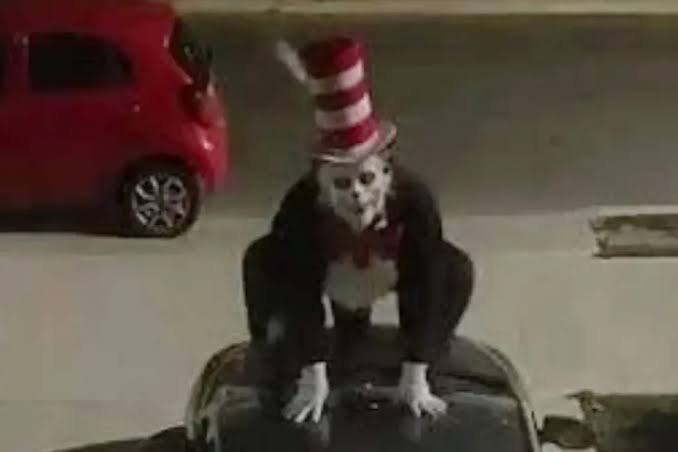
Cat in the Hat is usually known as a funny character from a popular children’s book. But in 2026, the familiar character has taken a much darker turn on social media. Videos and images showing a creepy version of the Cat in the Hat appearing outside homes, schools, and neighbourhoods have been spreading across platforms such as TikTok and Snapchat.
What makes this trend more concerning is that some posts use real school names, locations, and even children’s names. Although many videos are made as jokes or using artificial intelligence (AI), the content has caused fear among children and raised questions about online privacy and safety.
Here is what the Cat in the Hat trend means, how it started, and why parents and schools are paying attention to it.
What Is the Cat in the Hat Trend?
The Cat in the Hat trend is a viral horror-style social media trend featuring a creepy version of the famous Dr. Seuss character. Instead of showing the playful cat from the original story, these videos present him as a frightening figure who appears to be watching people or hiding around real-world locations.
In many posts, the character is shown standing outside houses, walking through dark streets, looking through windows, or appearing near schools. Some videos are designed to look like CCTV or doorbell camera recordings, making them seem like real sightings.
Creators use AI-generated images, video editing, and clips from the 2003 live-action movie The Cat in the Hat, starring Mike Myers. They often add dark music, strange movements, and scary captions to make the videos more disturbing.
Some versions go beyond ordinary horror memes. They mention real towns, schools, dates, or people’s names, making the content feel personal to the children who see it.
Where Did the Cat in the Hat Trend Start?
The trend developed from a series of creepy edits featuring Mike Myers as the Cat in the Hat in the 2003 movie. According to Euronews, one of the early viral videos appeared on TikTok in late June 2026. It showed the character dancing to an eerie soundtrack and received more than 4.4 million views within a week before the original video was deleted.
Other users began making similar edits, turning ordinary scenes from the movie into strange and frightening videos. The trend later developed into fictional sightings of the character in streets, driveways, and outside people’s homes.
The trend also gained attention in the United Kingdom and Ireland, where some users started sharing videos that appeared to show the Cat in the Hat near familiar locations. Some people became concerned that the sightings were real, leading police to clarify that the videos were fake and created using AI or editing tools.
As the trend spread, it moved beyond general horror entertainment. Some posts began mentioning actual schools, local communities, and children. This change attracted attention from parents, school officials, and law enforcement agencies.
Why Is the Cat in the Hat Trend Scaring Children?
The biggest concern is not simply that the character looks frightening. It is the way some creators connect fictional horror content with real people and places.
For example, a video showing a strange character outside an unknown building may look like an ordinary horror edit. However, when the same video mentions a child’s school or includes their name, it can feel like a direct warning.
Children may not always understand whether a video is AI-generated, edited, or completely fictional. A realistic-looking image combined with a threatening caption can make them believe that someone is watching them or planning to visit their school.
According to Bitdefender, children who feel personally targeted may experience fear, embarrassment, trouble sleeping, or anxiety about going to school. Some may repeatedly check social media to see whether more posts about them have appeared.
Parents should pay attention if their child suddenly becomes withdrawn, avoids school, checks their phone excessively, or keeps asking for reassurance about their safety. These reactions do not automatically mean that a child is in danger, but they are worth discussing.
Also Read: Waist Heart Trend Meaning and Origin
How AI and Social Media Make the Trend More Convincing
Artificial intelligence has made it easier for people to create realistic-looking images and videos without recording an actual event. Someone can take a photograph of a street, school entrance, or house and use editing tools to add a fictional character to the scene.
Creators can also add security-camera effects, dark lighting, blurry footage, and background sounds to make the result look like a real recording. When these videos appear on social media, viewers may not immediately recognise that they have been manipulated.
Another problem is how quickly such content spreads. A frightening video can receive thousands of views, comments, and shares in a short time. Other creators may copy the idea and add new locations or names to make their versions more interesting.
This creates a cycle in which fictional content becomes increasingly personal and disturbing. Even when the original creator intended to make a joke, people who see their school or name in a threatening post may not find it funny.
Also Read: Vyper Face Meme Meaning and Origin
Why Are Schools and Police Concerned?
Schools and law enforcement agencies have raised concerns because some posts connected to the trend contain threatening messages directed at real schools and students.
In September 2026, several schools and police departments in the United States issued warnings about disturbing Cat in the Hat posts. The Guardian reported cases involving teenagers who were arrested or charged over threatening content connected to the trend.
In one reported case, a teenager in Kansas was arrested after allegedly publishing a video containing threats toward students. Other incidents led schools to take extra safety precautions and increase police presence around school buildings.
Authorities have made it clear that calling something a prank does not automatically make it harmless. Threatening messages involving real schools or people can create panic, interrupt school activities, and lead to serious consequences.
Also Read: Fat Shane Meme Meaning and Origin
What Should Parents Do If Their Child Sees the Cat in the Hat Trend?
Parents do not need to panic if their child comes across one of these videos. However, they should take the opportunity to explain how online content can be edited and why personal information should not be shared publicly.
Here are some practical steps parents can follow:
- Talk without blaming: Ask your child what they saw and how it made them feel. Avoid making them feel guilty for watching or sharing a video.
- Explain AI-generated content: Help children understand that images and videos can be created or changed using AI. Something that looks real is not always real.
- Protect personal information: Avoid publicly sharing school names, home locations, daily routines, and other details that could identify a child.
- Check privacy settings: Review who can see your child’s social media posts, tag them, or mention their account.
- Save evidence: If a post names or targets your child, take screenshots showing the content, account name, date, and any threatening messages.
- Report the post: Use the reporting options on the platform where the content appeared. Avoid sharing it further.
- Contact the school: Inform school officials if the post mentions a school, student, or school-related location.
- Contact the police when necessary: If there is a credible threat or an immediate safety concern, contact local law enforcement.
Most importantly, children should know that they can talk to their parents or another trusted adult whenever something online makes them uncomfortable.
Is the Cat in the Hat Trend Real or Fake?
The frightening sightings shown in these viral videos are generally fictional, AI-generated, or digitally edited. There is no evidence that the fictional Cat in the Hat character is actually appearing outside people’s homes or schools.
Police in the United Kingdom and Ireland have also addressed the fake sightings and explained that the videos were created using AI prompts and familiar local images.
However, this does not mean every post connected to the trend should be ignored. A fictional character can still be used to deliver a real threat against a school or an individual. Parents and schools should judge each post based on its actual content rather than assuming that everything is harmless entertainment.
Also Read: 2Slimey Side-Profile Meme Meaning and Origin
| Topic | Information |
|---|---|
| Trend name | Cat in the Hat Trend |
| Character | The Cat in the Hat, created by Dr. Seuss |
| Original inspiration | The 2003 live-action movie starring Mike Myers |
| Early viral content | A creepy TikTok edit featuring the character dancing to an eerie soundtrack |
| Early timeline | Late June 2026 |
| Major platforms | TikTok, Snapchat, Instagram, and other social media platforms |
| Content type | AI-generated images, edited videos, horror memes, and fake sightings |
| Common scenes | Outside homes, near schools, on streets, and through windows |
| Main concern | Threatening posts involving real schools, locations, and children’s names |
| People affected | Children, parents, students, teachers, and local communities |
| Safety advice | Protect personal information, save evidence, report threats, and speak with trusted adults |
Hallorann discovers an underground location filled with children’s toys and a mysterious circus trailer. He also sees glowing yellow eyes and floating bodies before the creature notices his presence.
The trend grew from creepy TikTok edits of Mike Myers playing the character in the 2003 movie. An early viral video appeared in late June 2026 and gained millions of views before being deleted. Other creators followed the idea with more disturbing edits and fictional sightings.
Many videos connected to the trend use AI-generated images or digitally edited footage. Some also use real people wearing costumes or clips from the 2003 movie.