
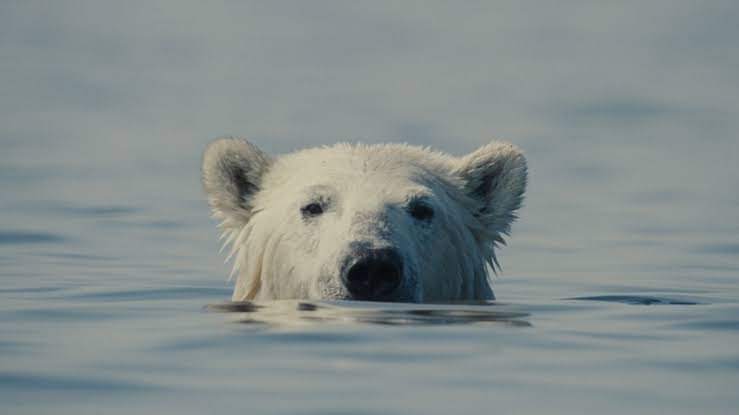
Nuisance Bear (2026) is a nature documentary that looks at the growing conflict between polar bears and humans in northern Canada. Directed by Jack Weisman and Gabriela Osio Vanden, the film follows a polar bear struggling to survive in a world that is becoming increasingly difficult for wildlife. As climate change affects the Arctic, polar bears are forced to search for food closer to human settlements, where they are treated as dangerous animals and unwanted visitors.
But the documentary is about much more than wildlife. It also explores the history of Canada’s Inuit communities, the effects of colonialism, and the complicated relationship between humans and nature. Through the story of a wandering polar bear, the filmmakers raise an important question: if humans have changed the environment and taken control of the land, who is really invading whose territory?
Nuisance Bear Recap: What Happens in the Documentary?
The documentary opens with a mother polar bear and her cubs resting together in the snow. The peaceful moment soon changes when the camera reveals a group of wildlife photographers pointing their expensive cameras toward the animals. What appears to be a beautiful wildlife experience for visitors is actually an uncomfortable situation for the bears, who are constantly being watched and photographed.
The story takes place mainly around Churchill, Manitoba, a Canadian town often called the Polar Bear Capital of the World. Every year, polar bears travel through this region along their traditional migration routes. However, their relationship with the area has changed as human settlements, tourism, and climate change have affected their natural environment.
Polar bears depend on sea ice to hunt seals, which are their main food source. But as temperatures rise and the winter freeze comes later, the bears have fewer opportunities to hunt. They spend more time waiting on land and begin looking for food around garbage dumps, buildings, fishing cabins, and other places occupied by humans.
For the residents, these encounters can become dangerous. A hungry polar bear is a powerful predator, and its presence near homes and children creates genuine safety concerns. Wildlife officers therefore monitor the animals and try to keep them away from populated areas.
One of the interesting aspects of the documentary is how it presents the same animal from different perspectives. Tourists see a rare opportunity to photograph a beautiful creature. Wildlife officers see an animal that needs to be controlled before someone gets hurt. The bear, however, is simply trying to find food and survive.
The filmmakers follow a wandering polar bear as it moves through this human-controlled environment. It encounters tourists, patrol operations, and the different systems designed to keep bears away from people. At one point, the animal is captured and taken to a holding facility before being relocated.
These scenes challenge the usual style of nature documentaries. Instead of simply showing animals hunting, resting, or raising their young, the film places the audience inside the uncomfortable relationship between wildlife and modern society.
The Inuit Community and the Deeper Meaning of the Story
While the polar bear provides the central focus, the documentary also gives considerable attention to the Inuit people who have lived in the Arctic for generations. Their relationship with polar bears is different from that of tourists and outside wildlife organizations.
For the Inuit, polar bears are not simply beautiful animals to photograph. They are part of their history, culture, environment, and traditional way of life. Indigenous communities have developed knowledge about the land and wildlife over many generations.
The film uses the voice of Inuit elder Mike Tunalaaq Gibbons to explain this relationship. His narration brings a personal and historical perspective to the documentary, particularly when he discusses the impact of colonialism and residential schools on Indigenous communities.
Gibbons recalls how Inuit children were sent to residential schools, where they were separated from their families and forced into systems that attempted to erase their language and culture. This separation also affected the transfer of traditional knowledge from one generation to another.
He also shares a painful personal memory about losing his son in a polar bear attack while his son was protecting his children. Gibbons believes the bear involved may have been separated from its mother too early. He wonders whether the traditional knowledge he was discouraged from passing down could have helped prevent the tragedy.
This personal story gives the documentary much of its emotional weight. The conflict between humans and polar bears is not presented as a simple argument between people and dangerous animals. It is also connected to a longer history of displacement, cultural loss, and outside control over Indigenous communities.
Also Read: Black Doves Season 2 Recap and Ending Explained
Why Are Polar Bears Called Nuisance Bears?
The title refers to polar bears that enter human settlements and create problems for residents. When the animals search for food around garbage dumps, cabins, or buildings, they can damage property and put people at risk.
Wildlife authorities may capture these bears, hold them temporarily, or relocate them to reduce the danger. From the perspective of the people living in these communities, managing the animals is sometimes necessary for their safety.
However, the title also carries a deeper meaning. The bears are following migration routes that existed long before modern towns and tourist attractions. They did not suddenly decide to enter somebody else’s world. Their environment has changed, and they are trying to adapt.
The documentary therefore asks whether calling an animal a nuisance is fair when human activity has played such a major role in changing its natural habitat.
Nuisance Bear Ending Explained: What Happens at the End?
The ending of Nuisance Bear does not deliver a traditional documentary conclusion in which every problem is solved. Instead, the film brings its different ideas about wildlife, human control, and Indigenous history together.
One of the important developments involves the relocation of the wandering polar bear. After being captured in the Churchill area, the animal is transported farther north toward Arviat, an Inuit community. This movement places the bear in another human environment, where the relationship between people and polar bears is shaped by a very different history.
The community faces its own difficulties with roaming polar bears. These encounters are not simply exciting wildlife experiences. They can threaten people’s safety, and residents must find ways to protect themselves and their families.
The film also places these events against the background of the community’s annual hunt and the restrictions that affect traditional hunting practices. The Inuit have lived alongside polar bears for generations, but modern conservation systems and regulations have changed how they can manage their relationship with wildlife.
This creates an uncomfortable contradiction. Polar bears are protected and closely managed by outside authorities, yet the people who have lived with these animals for generations do not always have the freedom to use their traditional knowledge and practices to manage local problems.
As the documentary approaches its conclusion, it becomes clear that relocating one bear cannot solve the larger problem. Moving an animal from one location to another only changes where the conflict happens. The underlying issues, including habitat loss, changing weather patterns, human development, and restrictions on Indigenous communities, remain.
| Category | Details |
|---|---|
| Movie Title | Nuisance Bear |
| Release Year | 2026 |
| Genre | Documentary, Nature |
| Directors | Jack Weisman and Gabriela Osio Vanden |
| Producers | Michael Code, Will N. Miller and Teddy Leifer |
| Narrator | Mike Tunalaaq Gibbons |
| Cast | Mike Tunalaaq Gibbons and Saad Kassis-Mohamed |
| Runtime | Approximately 89 minutes |
| Countries | United States and Canada |
| Languages | Inuktitut and English |
| Original Short Film | Nuisance Bear (2021/2022 short film) |
| Award | 2026 Sundance U.S. Documentary Grand Jury Prize |
Also Read: Wild Horse Nine Recap and Ending Explained
What Does the Ending Really Mean?
The ending is best understood as a question about ownership and displacement. Humans have built settlements, roads, tourist attractions, and industrial sites across landscapes that were once dominated by wildlife. As these changes affect polar bears, the animals are increasingly treated as intruders.
But the film makes the situation more complicated by showing that Inuit communities have also experienced displacement. Their traditional lands, knowledge, and ways of life have been affected by colonial policies and outside control.
There is a clear connection between these two experiences. The polar bear loses parts of its natural habitat, while Indigenous people struggle with the loss of cultural freedom and control over their traditional environment.
Mike Tunalaaq Gibbons’ narration is particularly important here. His memories of residential schools and the death of his son show that this conflict is not only about protecting wildlife. It is also about remembering the damage caused when people are separated from their land, traditions, and knowledge.
The filmmakers do not suggest that polar bears should be allowed to enter every settlement without intervention. The danger to local families is real. Instead, they encourage viewers to look beyond the simple labels of dangerous animal and nuisance bear.
The final message is that humans cannot completely separate themselves from the natural world and then blame animals for trying to survive within it. The documentary leaves viewers with an uncomfortable question: who actually has the right to decide where another living creature belongs?
Also Read: The Last Temptation of Becky 2026 Recap and Ending Explained
Why Is Nuisance Bear Different From Other Nature Documentaries?
Most nature documentaries focus on animal behaviour, hunting, survival, and the beauty of the natural world. Nuisance Bear takes a different approach by showing what happens when wildlife enters a world designed almost entirely around human needs.
The camera often stays close to the bear’s perspective. Viewers see photographers, vehicles, buildings, fences, and people watching the animal. This visual approach makes humans look like another part of the bear’s difficult environment.
The film also avoids giving easy answers. It recognises that people living near polar bears have legitimate safety concerns, while also showing how climate change and human development have contributed to the conflict.
Its most powerful element is the connection between the bear’s displacement and the history of the Inuit people. Rather than treating Indigenous knowledge as a side topic, the film makes it central to understanding the wider problem.
Yes. Nuisance Bear is a documentary based on real wildlife encounters and the experiences of people living alongside polar bears in northern Canada. It examines the challenges faced by both humans and animals.
The documentary mainly focuses on Churchill, Manitoba, Canada, a town famous for its polar bear population. It also follows the bear’s journey toward Arviat, an Inuit community.
The wandering polar bear is captured and relocated from the Churchill area toward Arviat. However, its relocation does not solve the larger problems affecting polar bears and the communities living alongside them.