
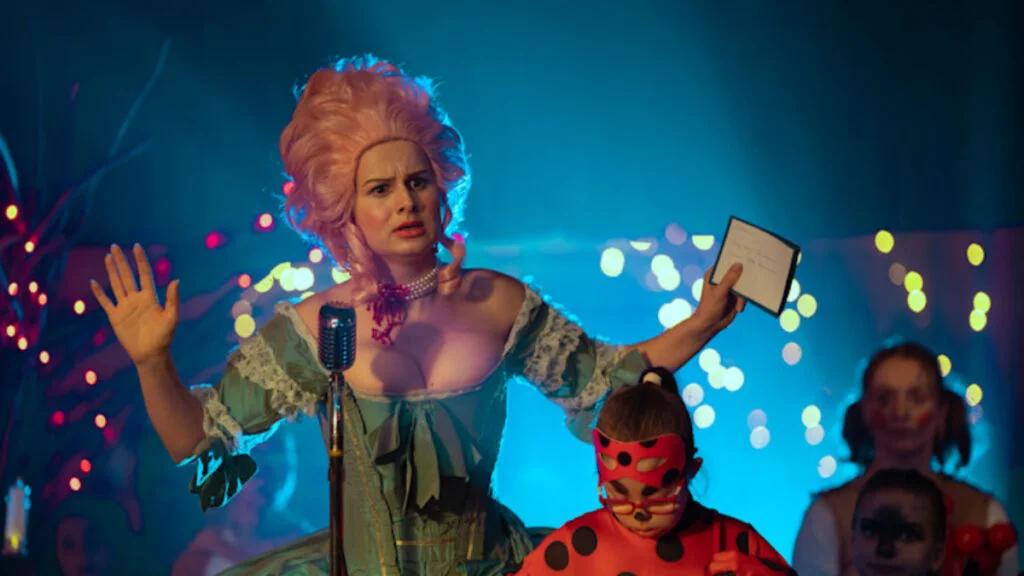
Spoilers ahead for The Mothers of Penguins Season 2.
The Mothers of Penguins Season 2 takes the story of Kama, Ula, Tatiana, and Jerzy beyond the challenges of raising children with different needs. After struggling to find the right educational environment for their children, the parents attempt to build a school of their own. Their plan gives them hope, but it also brings financial pressure, disagreements, and problems that threaten their relationships.
The Polish Netflix drama, originally titled Matki pingwinów, returns with a story about the difference between wanting to help children and understanding what that responsibility really involves. The second season ends with important decisions for Kama and growing tensions among the parents. Rather than solving every problem, the finale leaves them facing difficult choices about family, work, friendship, and the future of their school.
The Mothers of Penguins Season 2 Ending Explained: What Happens in the Finale?
The season finale, titled “Christmas,” brings Kama’s professional ambitions and family responsibilities into conflict. She continues pursuing her career as an MMA fighter while helping the group run a school designed to support children with different educational needs. Both responsibilities demand time and energy, and Kama finds it increasingly difficult to manage everything.
Her championship fight becomes a major turning point. Kama faces Thérèse “Guillotine” Saigner, but the fight does not end in her favor. Thérèse defeats her by submission in the second round and maintains her undefeated record.
The loss hurts Kama, but it also forces her to think about the sacrifices she has made. Fighting has always been a major part of her identity, giving her a clear goal to work toward. Parenting, however, does not offer the same simple rules or guaranteed results.
After the fight, Kama apologizes to her family for snapping at them. She explains that she needed to finish something, showing that she is beginning to understand how her determination has affected the people around her.
The school also remains a major source of conflict. The parents began with a shared goal of creating a better place for their children, but running the institution has exposed differences in their ideas and expectations. The ending makes it clear that their good intentions will not be enough to keep the school running smoothly.
Why Does Kama Lose Her Championship Fight?
Kama’s defeat is more than a disappointing sporting result. It reflects the growing gap between the life she wants to lead and the responsibilities she is trying to manage.
As an MMA fighter, Kama is used to dealing with problems through discipline, training, and determination. These qualities have helped her succeed in the ring, but they cannot solve every difficulty at home. Jaś needs her attention, and the school requires her involvement as well.
The fight against Thérèse forces Kama to face the limits of her usual approach. She cannot simply push herself harder and expect everything to work out. Her apology afterward suggests that she recognizes the effect her choices have had on her family.
Her defeat does not mean that her ambition is wrong. The series gives her a life beyond motherhood, and her sporting career is an important part of who she is. The real question is whether she can continue pursuing her goals without neglecting her family or exhausting herself.
Also Read: Wildwood (2026) Movie Recap and Spoilers
Does Kama Quit MMA at the End of Season 2?
Kama’s loss raises serious questions about her future as a fighter. The finale makes her reconsider the role of MMA in her life, especially as she struggles to balance training, family life, and the school.
However, the important point is not that Kama must give up her career to become a good mother. Her story is about finding a balance between her own ambitions and her son’s needs. She must decide what she can realistically manage and whether her current lifestyle is sustainable.
Her journey also challenges the idea that a parent must sacrifice every personal dream for a child. Kama can love Jaś and remain an ambitious individual at the same time. What matters is how she handles those responsibilities.
The ending leaves her at a turning point. Her future depends on whether she can accept her limits, make practical decisions, and understand that changing direction does not automatically mean failure.
What Happens to Jaś in the Ending?
Jaś remains central to Kama’s story, even when the season focuses on the school and the adults’ personal problems. In the first season, Kama struggles to accept that her son, who is autistic, needs a different educational environment. She initially finds it difficult to understand why his intelligence does not prevent him from facing challenges at school.
Over time, she learns that supporting Jaś does not mean lowering her expectations for him. It means understanding how he experiences the world and giving him the support he needs to learn and develop.
The second season builds on that lesson through the parents’ attempt to create a more inclusive school. The institution is meant to give children a place where their individual strengths and needs are recognized rather than judged against a single standard.
Jaś’s story does not receive a complete resolution in the finale. His future remains connected to the adults’ ability to maintain a supportive educational environment. The show makes an important point here: children continue to grow, and their needs can change over time. A school must be willing to adapt rather than assume that one approach will always work.
Why Do the Parents Build Their Own School?
The school is the biggest development in Season 2. In the earlier part of the story, the parents have to deal with institutions that they feel do not properly understand their children. They want an environment where children can learn without being judged for differences in how they communicate, behave, or process information.
Instead of continuing to depend on other institutions, Kama, Ula, Tatiana, and Jerzy attempt to create a school that reflects their values. Their goal is to give children the support and opportunities they deserve.
But establishing a school creates responsibilities they cannot ignore. They have to deal with finances, administration, educational decisions, and the needs of different families. Good intentions cannot automatically solve these practical problems.
The project also changes their friendships. They were once parents supporting one another through similar struggles. Now they also have professional responsibilities and disagreements over how the school should operate.
This is one of the season’s central ideas. It is easier to criticize a system from the outside than to run one yourself. Once the parents become responsible for the school, they must confront the same difficult decisions they once expected other people to handle.
Also Read: Slow Horses Season 6 Recap and Ending Explained
Why Does Ula’s Relationship With Kama Become Complicated?
Kama and Ula share a desire to help their children, but their friendship comes under pressure as the school becomes more difficult to manage. They do not always agree on leadership, responsibility, or the best way to deal with problems.
Their disagreements matter because the school is not just a workplace. It represents their shared hope for their children. When they disagree about its future, the conflict becomes personal.
Ula’s own family and personal problems also affect her decisions. Her experiences show how difficult it can be to balance the needs of a child, relationships, and responsibilities outside the home.
Their conflict does not necessarily mean that their friendship is beyond repair. Instead, the season shows that caring about someone does not guarantee that two people will always agree. If Kama and Ula want to preserve their relationship, they will need to communicate honestly and respect each other’s limits.
Their story also reflects a wider theme in the series: people can share the same values while having very different ideas about how to put those values into practice.
What Happens to Tatiana and Jerzy?
Tatiana and Jerzy have their own challenges alongside the problems at school. Their stories show that the adults are not simply parents working toward one common goal. They have personal lives, relationships, and needs that cannot be put aside indefinitely.
Tatiana begins examining her own happiness and independence. Her relationship with her husband raises questions about whether the life she has built still reflects what she wants. Her journey suggests that caring for a family does not mean ignoring personal dissatisfaction.
Jerzy, meanwhile, has to deal with the demands of his professional role and the difficult decisions that affect students and families. His story highlights the pressure educators face when they must balance their principles with the practical limits of the system they work in.
Neither character receives an easy solution to every problem. Their stories strengthen the season’s main message: adulthood and parenting involve difficult choices, and there is no single answer that works for everyone.
What Is the Real Meaning of The Mothers of Penguins Season 2 Ending?
The ending is about the difference between caring for people and understanding what they actually need. Kama and the other parents want their children to feel accepted, supported, and safe. Creating their own school gives them a chance to turn that belief into action, but it also forces them to face financial limits, disagreements, and personal sacrifices.
The school becomes a test of their values. They want their children to be accepted as individuals, yet the adults must also learn to accept that their friends and colleagues have different needs and opinions.
Kama’s championship defeat supports this idea. She has spent much of her life believing that determination can help her overcome almost anything. Her experiences as a parent show that not every problem can be solved through force of will. Sometimes, strength means admitting that something is not working and making a change.
The show also avoids placing the blame for family struggles on children with additional needs. Much of the pressure comes from systems that fail to provide enough support, financial demands, unrealistic expectations, and the challenge of balancing different responsibilities.
Ultimately, the finale asks whether the parents can build a future that works for everyone involved. Their school may provide a better environment, but it cannot remove every obstacle. Their friendships may offer support, but they cannot prevent every disagreement.
The message is simple: inclusion requires more than good intentions. It takes patience, resources, compromise, and a willingness to keep learning.
Also Read: Marshals Season 2 Episode 2 Recap and Review
| Detail | Information |
|---|---|
| Title | The Mothers of Penguins |
| Original Polish title | Matki pingwinów |
| Season | Season 2 |
| Genre | Drama |
| Platform | Netflix |
| Finale episode | Christmas |
| Main character | Kamila “Kama” Barska |
| Main cast | Masza Wągrocka, Barbara Wypych, Magdalena Różczka, and Tomasz Tyndyk |
| Main storyline | Parents trying to build and maintain an inclusive school for their children |
| Major turning point | Kama loses her championship fight and reassesses her priorities |
| Central themes | Parenting, inclusion, friendship, ambition, and family responsibilities |
| Ending | Open-ended, with personal and professional challenges still unresolved |
Their friendship faces pressure as disagreements about the school and their personal responsibilities grow. Their relationship shows that people can share the same goals but still disagree about the best way to achieve them.
Running a school involves financial pressure, administrative work, and difficult educational decisions. Although the parents share the same goal, they sometimes disagree about how to manage the institution and solve its problems.
Kama, Ula, Tatiana, and Jerzy want to create a place where children with different needs can learn and feel accepted. Their experiences with existing educational systems inspire them to build a school that offers more suitable support.
The ending raises questions about Kama’s future in MMA but her defeat does not automatically mean she must abandon her career. Her main challenge is finding a balance between her personal ambitions and her responsibilities as a mother.
The ending is a mixture of hope and uncertainty. The characters make progress, but their personal struggles, relationships, and school responsibilities remain complicated. The finale focuses more on growth and difficult choices than on giving everyone a perfect ending.