
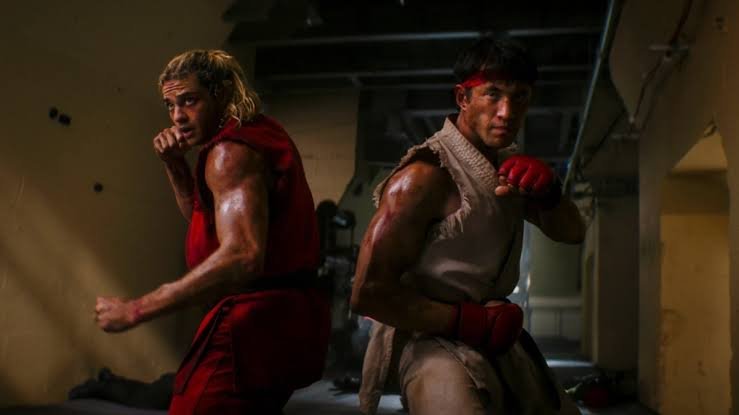
Street Fighter (2026) Movie Recap and Spoilers: The new live-action Street Fighter movie brings Capcom’s famous fighting game to the big screen with Ryu, Ken Masters, Chun-Li, and a dangerous plan involving the powerful villain M. Bison. Directed by Kitao Sakurai, the film mixes martial arts, arcade-style action, humor, and familiar characters from the video game series. Beneath the colorful fights lies a story about friendship, revenge, inner darkness, and the cost of chasing power.
Set in 1993, the movie follows Ryu and Ken as they reunite for the World Warrior Tournament. What begins as a fighting competition soon becomes a much bigger conflict involving Shadaloo, Akuma, and Ryu’s struggle to control his darker side. The film also leaves important questions unanswered, setting up the possibility of another chapter.
Warning: Major spoilers ahead. This recap covers the main story, the ending, and the post-credits scene.
Street Fighter (2026) Movie Recap
Ryu and Ken’s Broken Friendship
The story takes place in 1993 and centers on two skilled martial artists, Ryu and Ken Masters. Although the two were once close friends, their relationship has fallen apart. Their past is tied to their martial arts master, Gouken, and a tragic encounter with Akuma, a fighter whose power is connected to a dangerous darkness.
Ryu carries the weight of his past and struggles with the temptation to use his anger as a source of strength. Ken, meanwhile, wants to prove that he is more than Ryu’s companion or rival. He wants recognition as a fighter in his own right.
Their problems are not limited to their fighting abilities. Jealousy, guilt, and old wounds have damaged their friendship, making their reunion much harder than a simple return to the tournament.
Chun-Li Brings Them Back to the Tournament
Chun-Li enters the picture with her own reasons for confronting M. Bison, the powerful leader of the criminal organization Shadaloo. She recruits Ryu and Ken for the World Warrior Tournament, a competition that brings together fighters from different backgrounds.
The tournament appears to offer the perfect opportunity for the two martial artists to test their skills against formidable opponents. However, Bison has a much darker purpose behind the event.
Rather than simply finding the strongest fighter, he wants to increase his own power. Ryu’s abilities make him especially valuable to Bison, whose plans involve the energy associated with the Hadouken.
The competition gradually becomes a trap. Ryu and Ken are forced to deal with threats that go beyond winning individual fights, while Chun-Li attempts to bring down Bison and his organization.
M. Bison’s Plan and the Return of Akuma
M. Bison is one of the central threats in the movie. He is calculating, ambitious, and willing to use other fighters to achieve his goals. His interest in Ryu is not simply about defeating him in combat. Bison wants to take advantage of Ryu’s extraordinary power.
The situation becomes even more dangerous when Akuma enters the conflict. Unlike a normal tournament opponent, Akuma represents a personal and emotional threat to Ryu. Their history is connected to Gouken’s death and Ryu’s fear of losing control of himself.
Akuma also pushes Ryu toward the darker side of his abilities. This creates a conflict between two different kinds of strength: the discipline Ryu has learned through martial arts and the destructive power he can unleash when anger takes over.
As the tournament continues, it becomes clear that defeating a powerful opponent will not necessarily solve Ryu’s problems. He must also face the feelings that have been driving him toward darkness.
Also Read: Devour (2026) Movie Recap and Ending Explained
Ken’s Choice Changes the Story
Ken’s journey is about more than proving that he can fight. His resentment toward Ryu has shaped their separation, and the truth about their past makes their relationship even more complicated.
During the tournament, Ken gets a chance to pursue victory for himself. However, when Ryu needs help, Ken must decide whether winning is more important than saving his old friend.
He ultimately chooses to help Ryu rather than put his own ambitions first. That decision costs him his chance to win the tournament, but it becomes one of the most important moments in their relationship.
Ken’s actions show that his friendship with Ryu has not completely disappeared. At the same time, helping Ryu does not instantly erase the betrayal and jealousy that damaged their bond.
| Movie Title | Street Fighter |
|---|---|
| Release Date | October 16, 2026 |
| Director | Kitao Sakurai |
| Writers | Kitao Sakurai and T.J. Fixman |
| Based On | Capcom’s Street Fighter video game franchise |
| Genre | Action, adventure, martial arts |
| Setting | 1993 |
| Ryu | Andrew Koji |
| Ken Masters | Noah Centineo |
| Chun-Li | Callina Liang |
| M. Bison | David Dastmalchian |
| Akuma | Joe Anoa’i (Roman Reigns) |
| Guile | Cody Rhodes |
| Dhalsim | Vidyut Jammwal |
| Blanka | Jason Momoa |
| Balrog | Curtis “50 Cent” Jackson |
| Production Companies | Legendary Pictures and Capcom |
| Distributor | Paramount Pictures |
Also Read: Marble Hall Murders Season 1 Recap and Ending Explained
Street Fighter (2026) Ending Explained
Ryu Becomes Dark Ryu
The final conflict brings Ryu face-to-face with Akuma. Faced with an opponent whose power is difficult to overcome, Ryu gives in to his darker energy.
He transforms into Dark Ryu, a more brutal version of himself who draws strength from anger and hatred. The transformation allows him to defeat Akuma, but it also threatens to take away the discipline and humanity that have defined him.
Ryu’s victory comes with a serious cost. Instead of returning to normal after defeating his opponent, he becomes a danger to the people around him. The darkness that helped him win is now controlling his actions.
This is the central conflict of the ending. Ryu can defeat powerful enemies, but he cannot safely rely on anger alone. If he loses control of himself, he risks becoming the very kind of threat he has spent his life fighting.
How Ken Saves Ryu
Ken refuses to abandon Ryu, even after seeing how dangerous his transformation has become. With help from Chun-Li and Dan Hibiki, he attempts to bring his friend back from the darkness.
Ken eventually unlocks his own Hadouken and uses it to help restore Ryu to himself. This moment gives Ken a victory that goes beyond the tournament. He proves that he has his own strength and that he does not need to defeat Ryu to establish his worth.
The scene also gives their friendship a new direction. Ken has learned the truth about their past, including Ryu’s jealousy and the way it affected their relationship. Yet he still chooses to save him.
Ryu survives, and the two friends have a chance to rebuild their connection. Their problems are not completely resolved, but Ken’s actions show that their bond is stronger than their rivalry.
Also Read: A Love Other Than Yours Episode 8 Recap and Ending Explained
M. Bison Escapes With Akuma
Just when the heroes appear ready to move forward, M. Bison escapes with the defeated Akuma.
Bison’s plans have already involved stealing power from Ryu, and Akuma now offers another possible source of strength. His escape means the heroes have not achieved a complete victory, even though Ryu has regained control of himself.
The ending leaves the larger conflict unresolved. Ryu, Ken, Chun-Li, and their allies still have a dangerous enemy to pursue, while Bison has the opportunity to become even more powerful.
Rather than finishing the fight against Shadaloo, the movie uses this development to set up a larger confrontation in a possible sequel.
Also Read: Angel and the Badman 2026 Movie Recap and Ending Explained
Street Fighter (2026) Post-Credits Scene Explained
The movie includes an animated mid-credits scene that introduces another important character: Sagat.
In the scene, M. Bison recruits Sagat, a powerful fighter who has a personal history with Ryu. Their rivalry goes back to an earlier World Warrior Tournament, where Ryu defeated him and left him with a lasting reason to seek revenge.
Sagat’s appearance adds another threat to the story. Bison is already dangerous, and his interest in recruiting powerful fighters suggests that his plans are far from over.
The scene also connects the movie more closely to the wider video game franchise. Sagat is a major character in the games, and his rivalry with Ryu provides a natural starting point for another story.
Most importantly, the post-credits scene leaves room for future conflicts rather than ending the larger battle.
What Does the Street Fighter Ending Mean?
The ending of Street Fighter is mainly about the difference between power and control. Ryu becomes stronger when he gives in to his darker side, but that strength nearly destroys him. Ken’s intervention shows that real strength also requires discipline, trust, and the ability to help others.
The film also changes the relationship between its two main characters. Ken begins the story wanting to prove himself and escape Ryu’s shadow. By the end, he demonstrates his worth through his own abilities and his decision to save his friend.
However, the story does not offer a complete victory against M. Bison. His escape with Akuma and the appearance of Sagat leave the main conflict open.
This ending may work as a setup for a larger franchise, but it also means viewers do not get a fully resolved confrontation with Bison in this film.
Will There Be a Street Fighter 2?
The ending clearly leaves room for a sequel, but the post-credits scene alone does not confirm that another movie has been officially approved.
A follow-up could explore Bison’s attempt to use Akuma’s power, Sagat’s rivalry with Ryu, and the growing partnership between Ryu, Ken, and Chun-Li. It could also give the heroes a more direct confrontation with Shadaloo.
For now, a sequel remains a possibility rather than a confirmed continuation.
Also Read: Other Mommy 2026 Movie Recap and Review
Street Fighter (2026) Movie Review
The 2026 reboot aims to bring the energy of the original arcade games to the cinema. Its bright visuals, recognizable characters, exaggerated fighting styles, and colorful presentation are designed to appeal to longtime fans.
Andrew Koji’s Ryu and Noah Centineo’s Ken provide the main emotional focus, while Callina Liang’s Chun-Li helps drive the story forward. David Dastmalchian also gives M. Bison an exaggerated villainous presence, and the large supporting cast brings many familiar faces from the games to life.
However, early reviews have been divided. Some critics appreciate the action, character references, and playful approach to the source material. Others argue that the crowded cast, uneven humor, and confusing story prevent the film from becoming a satisfying action movie on its own.
The ending is another point of criticism. Although it creates opportunities for future films, the unresolved conflict may leave viewers wanting a stronger conclusion to this chapter.
Overall, Street Fighter is aimed most directly at viewers who enjoy the game’s characters, signature moves, and over-the-top fighting style. Those looking for a tightly structured story may find it less satisfying.
M. Bison, played by David Dastmalchian, is the main villain. He leads the criminal organization Shadaloo and seeks to gain more power through his plans involving the tournament and its fighters.
The ending centers on Ryu’s struggle with his darker power. His transformation makes him more dangerous, but Ken refuses to abandon him and tries to help him regain control.
The reported ending involves Ryu giving in to his darker energy and becoming Dark Ryu. This transformation represents his struggle to control his anger and avoid losing himself to power.
The reported ending leaves M. Bison’s larger plans unresolved. His escape keeps the conflict alive and leaves room for another confrontation.