
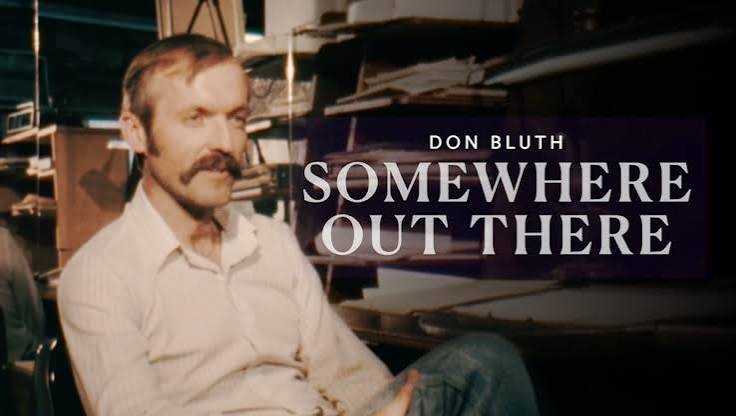
Don Bluth: Somewhere Out There (2026) is a documentary about the animator who dared to challenge Disney when few believed an independent animation studio could survive. Directed by Dave LaMattina and Chad N. Walker, the film follows Don Bluth’s journey from a Disney employee to the creator of beloved animated movies such as The Secret of NIMH, An American Tail, The Land Before Time, and Anastasia.
But this is not simply a story about an artist who made successful films. It also explores the financial troubles, broken partnerships, personal pride, and changing technology that slowly brought his animation empire down. Through interviews and rare footage, Bluth looks back at the decisions that shaped his career, including those he now considers mistakes.
Don Bluth: Somewhere Out There (2026) Movie Recap
The documentary opens with Don Bluth reflecting on what it means to dedicate an entire life to art. He discusses the 1948 film The Red Shoes, whose central character is so devoted to dancing that her passion becomes impossible to separate from her life. For Bluth, animation has always carried a similar meaning.
The film then moves between his early life, his years at Disney, and the independent studio he built after leaving the company. Rather than following every event in strict order, it uses Bluth’s own memories to explain why he made certain choices and how those decisions affected his future.
Don Bluth’s Early Life and His Love for Animation
Bluth grew up fascinated by animated films, especially the work of Walt Disney. He wanted to create drawings that could move, express feelings, and tell stories that stayed with audiences long after the credits ended.
The documentary briefly touches on his difficult childhood, including his relationship with his father and the support he received from his mother. It also mentions his time as a Mormon missionary. However, most of the film focuses on his professional life rather than his family or personal relationships.
Bluth joined Walt Disney Productions in 1955 and learned from experienced artists who had helped establish the studio’s famous animation style. Working there should have been his dream career, but he gradually became unhappy with the direction the company was taking.
Why Did Don Bluth Leave Disney?
By the late 1970s, Bluth believed Disney was placing too much importance on saving money and not enough on the quality of its animated films. He felt that the studio was moving away from the artistic standards that had made its earlier movies special.
In 1979, Bluth made one of the biggest decisions of his life. He left Disney with a group of fellow animators to establish an independent studio.
Gary Goldman and John Pomeroy became two of his most important creative partners. Together, they hoped to prove that traditional hand-drawn animation could still produce beautiful, emotional stories outside Disney.
Leaving an established company was a huge risk. Disney had money, distribution connections, and decades of experience. Bluth’s new team had artistic talent and ambition, but far fewer resources.
The Secret of NIMH and the First Major Challenge
The documentary explores the making of The Secret of NIMH, released in 1982. The film follows Mrs. Brisby, a widowed mouse trying to protect her sick child while facing dangerous circumstances.
Unlike many children’s films of the period, The Secret of NIMH embraced dark settings, frightening situations, and serious emotions. Its detailed animation showed how much effort Bluth’s team was willing to put into every scene.
The movie earned critical praise, but it did not become the enormous financial success needed to secure the studio’s future.
Bluth had proved that he could create an impressive animated feature without Disney. What he had not yet proved was that he could keep an independent animation business financially stable.
How Dragon’s Lair Helped Save the Studio
One of the documentary’s interesting chapters concerns Dragon’s Lair, the animated arcade game released in 1983.
At a time when most video games relied on simple graphics, Dragon’s Lair featured detailed animation that looked closer to a cartoon film. Players controlled Dirk the Daring as he attempted to rescue Princess Daphne.
The game’s success gave Bluth’s studio an important financial boost. It also demonstrated that traditional animation could work in entertainment beyond movie theaters.
Still, the studio needed more successful feature films to survive in the long run.
Steven Spielberg and the Success of An American Tail
Bluth’s career changed when he began working with Steven Spielberg.
Their collaboration produced An American Tail in 1986, a story about a young mouse named Fievel Mousekewitz who becomes separated from his family after they immigrate to America.
Behind its colorful animation, the movie explores immigration, loneliness, family separation, and hope. It became a major commercial success and helped establish Bluth as a serious competitor to Disney.
The partnership continued with The Land Before Time in 1988, which follows a young dinosaur named Littlefoot after the death of his mother. The story deals with grief, friendship, and survival in a way that young audiences could understand.
These films showed what made Bluth’s work different. He believed children could handle sadness and fear when those emotions were part of a meaningful story.
Why Did Don Bluth and Steven Spielberg Separate?
Despite their successful partnership, Bluth and Spielberg eventually disagreed about the future of their animated films.
According to the documentary, one major issue involved producing sequels at lower costs. Spielberg supported a more economical approach, while Bluth worried that cheaper productions would weaken the quality of animation.
Bluth was unwilling to make the compromises he believed would damage his artistic standards.
The disagreement contributed to the end of their working relationship. Looking back, Bluth recognizes that his stubbornness sometimes prevented him from finding practical solutions.
The documentary presents this conflict as one of the central problems of his career. The same determination that helped him create remarkable films also made it difficult for him to manage business relationships.
Also Read: Elsinore 2026 Movie Recap and Ending Explained
The Move to Ireland and the Studio’s Financial Problems
To reduce production expenses, Bluth moved much of his animation operation to Dublin, Ireland.
There, the studio trained young animators and helped develop a new generation of animation talent. The move became an important chapter in the growth of Ireland’s animation industry.
However, operating a large animation studio remained expensive. Every hand-drawn film required enormous amounts of labor, and a single box-office disappointment could threaten the company’s future.
Movies such as Rock-A-Doodle and Thumbelina struggled to match the success of Bluth’s earlier productions.
Bluth also admits that some later projects moved forward with scripts that were not fully developed. Beautiful animation could not always make up for weak storytelling.
Meanwhile, Disney was enjoying a major revival with films such as The Little Mermaid and Beauty and the Beast. The competition that Bluth had once challenged was becoming stronger again.
Anastasia Gives Don Bluth Another Success
After years of professional and financial setbacks, Bluth received another major opportunity through Fox Animation Studios.
His 1997 film Anastasia became one of the biggest successes of his career.
The musical fantasy follows a young woman searching for answers about her past and her possible connection to Russia’s royal family. Its detailed animation, music, and emotional story helped introduce Bluth’s work to another generation.
For a time, Anastasia seemed to prove that traditional animation still had a place in a market dominated by Disney.
But the industry was changing. Computer-generated animation was gaining popularity, and studios were beginning to move away from the hand-drawn techniques Bluth had spent his life perfecting.
Although Bluth later directed Titan A.E. in 2000, the documentary gives little attention to that film. Instead, Anastasia becomes the main final achievement in its account of his career.
Also Read: Madden Recap and Ending Explained
| Movie Title | Don Bluth: Somewhere Out There |
|---|---|
| Year | 2026 (streaming release) |
| Genre | Documentary, Biography |
| Directors | Dave LaMattina and Chad N. Walker |
| Writers | Dave LaMattina and Chad N. Walker |
| Producer | Dave LaMattina |
| Production Company | Copper Pot Pictures |
| Main Subject | Don Bluth |
| Featured Personalities | Don Bluth, Gary Goldman, John Pomeroy, Steven Spielberg, and others through interviews and archival material |
| Runtime | Approximately 88 minutes |
| Original Language | English |
| Country | United States |
| Streaming Release Date | November 20, 2026 |
| Availability | Amazon Prime Video (rent or buy, depending on region) |
Don Bluth: Somewhere Out There (2026) Ending Explained
The documentary ends on a reflective note rather than with a dramatic victory. Bluth looks back on a career filled with artistic achievements, failed projects, difficult decisions, and changing audience tastes.
By this stage, the film has shown how his dream of building a lasting independent animation empire gradually became harder to maintain. His films were expensive, Disney had regained its strength, and computer animation was transforming the industry.
Near the end, Bluth confronts a painful question: how can an artist continue doing the work he loves when audiences no longer seem interested in seeing it?
This question captures the sadness behind the documentary. Bluth spent decades improving a particular form of animation, only to watch Hollywood move toward a different method of filmmaking.
Yet the ending does not suggest that his career was meaningless or that his artistic ambitions were a mistake.
Instead, it asks viewers to consider what success really means. Bluth may not have built a studio that lasted as long as Disney, but he created films that people still remember for their characters, music, and emotional stories.
Also Read: The Hunger Games Sunrise on the Reaping Movie Recap and Ending Explained
What Does the Ending Mean?
The ending is about the difference between artistic success and commercial success.
Bluth wanted his films to be beautiful, detailed, and emotionally honest. He was often willing to spend more money and time to achieve that goal. Unfortunately, making great art did not always mean making profitable films.
His refusal to compromise helped produce some of his finest work, but it also contributed to disagreements, financial losses, and missed opportunities.
The documentary does not portray him as a flawless genius. It shows an artist who made mistakes and sometimes allowed pride to influence his decisions.
At the same time, his career demonstrated that Disney was not the only company capable of producing ambitious animated features.
That may be his greatest achievement. He helped open the door for a more competitive animation industry, even though his own company struggled to survive.
Why Is the Documentary Called Somewhere Out There?
The title Somewhere Out There carries more than one meaning.
It is also the name of the famous song from An American Tail, in which separated family members express their hope of finding one another again.
In the documentary, the title can also be understood as a reference to Bluth’s lifelong search for artistic freedom and the kind of animation he believed in.
He spent much of his career looking for a place where he could create films without sacrificing his artistic vision. Sometimes he found that freedom, but keeping it came at a high price.
The title therefore connects one of his best-known films with the larger story of his life.
Also Read: Bitter Christmas Recap and Ending Explained
What Happened to Don Bluth’s Animation Studio?
Bluth’s independent animation operations faced repeated financial problems. His studio in Ireland eventually closed, while his later work at Fox Animation Studios ended as the industry moved further toward computer-generated films.
Fox Animation Studios produced Anastasia and Titan A.E., but the commercial failure of Titan A.E. contributed to the end of its feature-animation operation.
Bluth’s dream of maintaining a major hand-drawn animation studio did not survive in the form he originally imagined.
However, the artists he trained, the techniques he developed, and the films he created continued to influence animation long after his studios closed.
Is Don Bluth: Somewhere Out There Based on a True Story?
Yes. Don Bluth: Somewhere Out There is a biographical documentary based on the real life and career of American animator Don Bluth.
It includes interviews with Bluth recorded late in his life, along with archival footage, production materials, and behind-the-scenes recordings from his animation projects.
The film covers real events, including his departure from Disney in 1979, the creation of his independent studio, his collaborations with Steven Spielberg, and the difficulties he faced during the decline of traditional hand-drawn animation.
However, much of the story is told from Bluth’s perspective. It is primarily his account of his career rather than a complete investigation of every disagreement or business decision.
Don Bluth: Somewhere Out There (2026) Review
One of the documentary’s strengths is its use of old footage. Seeing animators working on drawings and watching early production material makes it easier to understand how much effort went into creating these films.
The documentary also benefits from Bluth’s willingness to discuss his failures. He does not simply blame Disney or changing technology for everything that went wrong. He recognizes that his own decisions sometimes made difficult situations worse.
Still, the film leaves some parts of his life unexplored. His personal relationships receive limited attention, and the later years of his career are covered rather quickly. Titan A.E., in particular, deserves more discussion because it marked an important turning point.
Even with these gaps, the documentary offers an interesting look at a filmmaker who helped shape modern American animation without becoming as commercially powerful as the company he challenged.
Don Bluth left Disney in 1979 because he disagreed with the studio’s creative direction. He believed that cost-cutting was affecting animation quality and wanted greater artistic freedom.
The documentary ends with Bluth reflecting on his achievements, mistakes, and the decline of traditional hand-drawn animation. Rather than offering a dramatic conclusion, it highlights his lasting influence on animated filmmaking.
Their partnership ended after creative and business disagreements. Bluth was concerned that lower-budget productions and sequels could weaken the artistic quality of their films.