
Warning: This article contains major spoilers for Fjord.
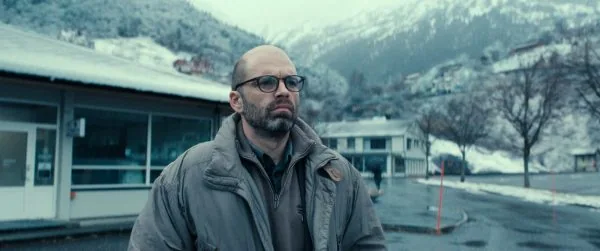
Fjord is a 2026 drama written and directed by Cristian Mungiu. The film follows Mihai and Lisbet Gheorghiu, a Romanian-Norwegian couple who move with their five children to a small Norwegian village. Their new life changes after bruises are discovered on their teenage daughter Elia, leading to an investigation into the family’s parenting and eventually a much larger legal and social conflict.
The film stars Sebastian Stan as Mihai, Renate Reinsve as Lisbet, Vanessa Ceban as Elia and Henrikke Lund-Olsen as Noora. It runs for 146 minutes and won the 2026 Palme d’Or at Cannes.
What Is Fjord About?
At the centre of Fjord is the Gheorghiu family. Mihai and Lisbet are deeply religious parents whose approach to raising their children is much stricter than that of the people around them. Their children gradually become friends with the children of their neighbours, the Halbergs, particularly Elia and Noora.
The situation changes when Elia arrives at school with bruises. What might initially look like a family matter quickly becomes an investigation involving teachers, child welfare authorities and the police. The authorities question the way the children are disciplined, while Mihai believes that his family is being judged because of its religious beliefs and cultural background.
Neither side receives a simple victory. Mungiu deliberately keeps important details open to interpretation, making the audience question how much of the situation can actually be understood from the outside. The film is built around conflicting perspectives rather than one definitive version of events.
Is Fjord Based on a True Story?
Fjord is fictional, but its story was influenced by real cases involving immigrant families and Norwegian child-protection authorities. Cristian Mungiu has spoken about cases involving families who lost custody of their children after conflicts with authorities in Nordic countries.
The film is particularly associated with the real Bodnariu case, involving a Romanian-Norwegian evangelical family whose five children were removed by Norwegian child-protection services in 2015.
However, Fjord should not be treated as a direct recreation of the Bodnariu family’s life. Mungiu changes the characters and circumstances to create a fictional story about cultural differences, parenting, religion, state intervention and the difficulty of knowing what happens inside another family.
What Happens to the Gheorghiu Family?
As the investigation develops, the Gheorghiu family becomes increasingly isolated. The children are separated from their parents, and the dispute moves beyond a private family problem into a legal battle.
Mihai becomes determined to fight the authorities and defend his family’s beliefs. Lisbet is placed in an especially difficult position because she is Norwegian but is also part of the Romanian family’s religious and cultural world.
The film does not end with the kind of courtroom victory normally expected from a legal drama. There is no simple moment where a judge declares one side completely right and sends the family happily home. Instead, the conflict leaves permanent damage behind.
That is important because Fjord is less interested in answering the question of who “won” than in showing what happens when two sides become convinced that their own understanding of right and wrong is the only possible one.
Also Read: A Love Other Than Yours Episode 3 Recap and Ending Explained
What Happens to Elia and Noora?
The relationship between Elia and Noora becomes increasingly important as the adult conflict grows.
Elia comes from a strict religious family, while Noora has a much more rebellious personality. Despite their differences, the two girls become close. Noora is fascinated by Elia’s beliefs and by the unusual things Elia seems able to do, while Elia is exposed to a freer way of living through Noora.
Their friendship becomes one of the few relationships in the film where the two sides are genuinely willing to influence each other.
That becomes especially important in the final scene.
What Happens at the End of Fjord?
Near the end of the film, the Gheorghiu family prepares to leave Norway. Elia boards a boat that will take her away, while Noora remains behind.
Noora runs toward the water to say goodbye. She then appears to walk across the surface of the fjord.
At first, the image looks impossible. Earlier in the film, Noora had seen Elia seemingly walking on water near the boats. Elia had suggested that she could eventually teach Noora how to do it.
The final scene reverses that earlier moment. This time, Noora appears to perform the same trick while Elia is leaving.
There is, however, a realistic explanation. Noora is not actually walking on open water. She is moving along a partly submerged structure or walkway, creating the illusion that she is walking directly across the fjord. The scene intentionally leaves room for both a practical and a spiritual interpretation.
Also Read: The Scandal KDrama Ending Explained
What Does the Final Scene Mean?
The ending is less about proving whether the “miracle” is real and more about what Elia and Noora have learned from each other.
Elia has grown up believing strongly in her family’s religious worldview. Noora begins from almost the opposite position. Yet their friendship allows both girls to cross a boundary that the adults in the film struggle to cross.
Noora learns to accept something that cannot easily be explained by ordinary logic. Elia, meanwhile, experiences a different kind of freedom through Noora.
This is why the final image works even if the audience knows there is a physical explanation for Noora’s apparent walk on water. The “miracle” is not necessarily that Noora can literally walk on water. The important change is that she has learned to see the world differently.
Why Is Walking on Water Important?
Walking on water has an obvious religious connection. The image recalls the biblical story of Jesus walking on water, which fits the strong Christian beliefs of the Gheorghiu family.
But Mungiu also gives the image a more personal meaning. Elia’s world is built around faith, rules and certainty, while Noora’s world is built around independence and questioning. Their friendship brings those two worlds together.
The final scene therefore turns the religious image into something more open. It can be viewed as a miracle, an illusion or simply a visual metaphor for the effect the girls have had on each other.
The ambiguity is intentional. Instead of explaining exactly what the audience should believe, the film leaves the image hanging between faith and reason.
Why Doesn’t the Film Give a Clear Verdict on Mihai and Lisbet?
This is one of the most important parts of the ending.
Fjord never gives viewers a final answer that completely settles whether Mihai and Lisbet should be viewed as victims of an unfair system or parents whose behaviour justified intervention. The film presents evidence and perspectives from both sides, but refuses to turn the story into a simple courtroom morality tale.
Mungiu has explained that he wanted the film to show conflicting perspectives and the difficulty of knowing the complete truth about what happens inside a family. He also connects the larger story to the question of how society functions when people fundamentally disagree about values.
That explains why the ending can feel unresolved. The lack of a clean answer is part of the film’s design.
Also Read: Outlander: Blood of My Blood Season 2 Episode 1 Recap and Ending Explained
What Does the Fjord Represent?
The fjord is more than just the location of the story.
It separates places and people, while also connecting them. The characters live beside something enormous and beautiful, but the same landscape can feel cold and threatening.
The film uses this setting to reflect the conflict between the Gheorghius and the society around them. On the surface, everything can look calm and orderly. Underneath, there are disagreements about religion, parenting, freedom, cultural identity and the power of institutions.
The frozen water in the final sequence adds another layer. Something that appears dangerous becomes a surface that the characters can cross. In much the same way, Elia and Noora learn to cross the boundary between their different worlds.
What Is the Meaning of the Ending?
The ending suggests that the younger characters may be capable of something the adults have struggled to achieve: changing through contact with someone who sees the world differently.
Mihai remains strongly attached to his beliefs. The authorities continue to defend their understanding of child protection. The larger legal conflict does not suddenly disappear.
Elia and Noora are different. Their friendship changes them.
That is why the final image belongs to them rather than to the courtroom. After spending most of the film watching adults argue over morality, law and responsibility, the story ends with two teenagers who have quietly learned from each other.
Does Fjord Have a Happy Ending?
Not in the traditional sense.
The Gheorghiu family does not return to the way it was at the beginning. The separation has already changed the parents and children, and Elia is leaving Norway. There is no big reunion that erases everything that happened.
However, the ending is not completely hopeless. The friendship between Elia and Noora gives the final moments a small sense of possibility. The girls have been affected by each other, and that change may matter more than the unresolved arguments between the adults.
So the ending is better described as bittersweet and deliberately ambiguous. The family story remains painful, but the final image suggests that something meaningful has survived.
Also Read: Plastic Beauty Season 1 Ending Explained
Fjord Ending Explained in Simple Terms
Elia leaves Norway with her family, while Noora runs after the departing boat. Noora appears to walk across the water, echoing something she previously saw Elia do. The scene has a realistic explanation because she is actually moving across a partially submerged structure, but it is filmed to resemble a miracle.
The point is not necessarily that Noora has gained supernatural powers. Instead, the scene shows how deeply Elia has affected her. At the same time, Elia has also been changed by Noora and the freedom she represents.
The adults spend the film fighting over whose beliefs are correct. The girls do something different: they listen to each other and change.
That is ultimately why the final image is so important. Fjord does not finish with a legal answer. It finishes with an image about faith, friendship, perception and the possibility of crossing a boundary that once seemed impossible.
| Information | Details |
|---|---|
| Film | Fjord |
| Year | 2026 |
| Director | Cristian Mungiu |
| Genre | Drama |
| Runtime | 146 minutes |
| Country | Romania, France, Norway, Sweden and Denmark |
| Starring | Sebastian Stan, Renate Reinsve, Vanessa Ceban and Henrikke Lund-Olsen |
| Main Characters | Mihai, Lisbet, Elia and Noora |
| Central Conflict | A family’s parenting and religious beliefs come under investigation after bruises are discovered on Elia. |
| Real-World Inspiration | The film was influenced by real cases involving immigrant families and Nordic child-protection authorities, particularly the Bodnariu case. |
| Ending | Elia leaves by boat while Noora appears to walk across the water. |
| Meaning of the Final Scene | The scene reflects the influence Elia and Noora have had on each other and leaves faith and reason open to interpretation. |
| Cannes Achievement | Winner of the 2026 Palme d’Or. |
The scene can be understood in more than one way. Noora appears to walk on the water, but the film also provides a realistic interpretation involving a partially submerged structure. The scene is deliberately left open to interpretation.
The scene represents the influence Elia has had on Noora. It can also symbolize how the two girls have crossed the boundaries between their different beliefs, backgrounds and ways of seeing the world.
Elia leaves Norway as the conflict surrounding her family reaches its later stages. Her departure is connected to the separation of the family and the larger dispute involving her parents and Norwegian authorities.
Their friendship is changed by everything that happens around them. Although they are separated at the end, both girls have clearly influenced one another, and the final scene shows that their connection has left a lasting effect.