
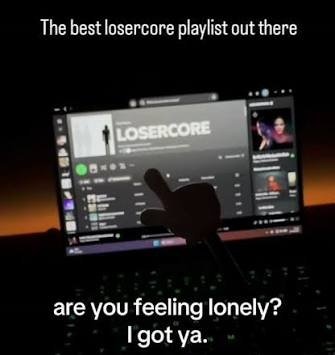
The Losercore Playlist meme started as a way to promote a Spotify playlist filled with moody alternative rock music. By October 2026, it had become an internet talking point thanks to strange AI-generated animations, awkward characters, and a wave of criticism on TikTok and X. What began as music promotion turned into a debate about internet humor, AI-made videos, and why anyone would put so much effort into advertising a playlist.
What Is the Losercore Playlist Meme?
The Losercore Playlist meme revolves around a Spotify playlist built around alternative music and the idea of being an outsider. The word “losercore” combines “loser” with the internet slang suffix “core,” which people often use to describe a particular style, mood, or identity.
In this case, the name suggests music for people who feel awkward, lonely, misunderstood, or disconnected from the usual social scene. It turns the idea of being a loser into an aesthetic rather than simply an insult.
The playlist gained attention through TikTok videos promoting its music. These videos eventually became a bigger part of the story than the playlist itself. Their unusual AI-generated animations attracted viewers, but many people also mocked the videos for their awkward look and questioned the need to promote a Spotify playlist so aggressively.
Losercore Playlist Meme Origin
The playlist was created by Spotify users depay178 and d. Its promotion began gaining attention in June 2026 through TikToker @user406398991.
On June 5, 2026, the TikToker posted an early promotional video for the playlist. The video reportedly received around 9,000 views over the following four months. A June 9 slideshow featuring five favorite losercore songs performed much better, collecting more than 1.3 million views during the same period.
The campaign took a different direction in September and October 2026. The creator began posting AI-generated animations with a retro video game look. Instead of relying only on song recommendations, the videos used recurring characters and strange situations to catch people’s attention.
One character represented a stereotypical loser who insisted that he was only interested in music. Other videos featured a blue man and a pink woman who were inseparable, resembling characters from the cover of TV Girl’s album Who Really Cares.
How Did the Losercore Playlist Go Viral?
The biggest wave of attention came in early October 2026, when the promotional videos started spreading beyond the audience interested in the music. The animations were unusual enough to attract reactions from people who found them funny, confusing, or simply uncomfortable to watch.
A video posted on October 5 reportedly passed 700,000 views in three days. Another animation featuring the blue and pink characters received more than 830,000 views within two days after being posted on October 6. A further video published on October 7 reportedly gained more than 910,000 views in a single day.
As people shared the clips, the conversation shifted from the songs to the videos themselves. Some viewers made fun of the animation style, while others questioned why a playlist needed such an elaborate promotional campaign. The criticism helped introduce the meme to people who had never listened to the playlist.
Also Read: Fanum Throwing Broccoli or Food Meme Meaning and Origin
Why Were People Making Fun of the Losercore Videos?
Much of the humor came from the gap between the videos’ serious promotional purpose and their strange execution. The animations tried to build a recognizable world around the playlist, but some viewers felt that the characters, visuals, and repeated scenes looked awkward or artificial.
Several users on X described the videos as low-quality AI content. Others found the central joke confusing. For example, a character presented as a lonely loser appeared to have several people around him, leading viewers to question whether the label even made sense.
Another point of criticism was the promotion itself. Some users wondered why someone would invest so much effort into marketing a Spotify playlist when the financial benefit was not obvious to them. The question became part of the joke, even though the creator’s exact motivation was not established by the available reporting.
The TV Girl Fan Art Controversy
The discussion became more serious on October 7, 2026, when artist and X user @antdoe13 alleged that their older TV Girl fan art had been used to generate imagery for the promotional videos.
The artist shared the original artwork alongside the AI-generated version and questioned why their work had been used. The post attracted significant attention and added an argument about artistic credit and consent to the wider debate.
This allegation is important because the controversy was no longer just about whether the videos were funny or poorly made. It also raised questions about how AI-generated content is produced and whether artists should have a say when their work is used as a reference. The available account reports the artist’s allegation; it does not, by itself, establish every detail of how the image was generated.
Also Read: Ethan’s Clubhouse Meme Meaning and Origin
What Does Losercore Mean in Internet Culture?
The term “losercore” fits into a broader internet habit of turning personal feelings and social identities into recognizable aesthetics. Words ending in “core” are often attached to music, clothing, images, and online communities to describe a particular mood or way of life.
Here, the idea of being a loser is presented with a mixture of self-awareness and humor. Instead of pretending to be popular or confident, the aesthetic leans into awkwardness, emotional music, and outsider identity.
That helps explain why the playlist could attract listeners even before its promotional videos became controversial. For some people, the label offers a playful way to describe music that matches their mood. For others, the exaggerated characters and AI animations are the main attraction.
The meme also shows how online promotion can take on a life of its own. Once viewers begin sharing a video to criticize it, the criticism can bring even more attention to the original campaign. In the Losercore case, the reaction became a major part of the story.
Losercore Playlist Meme: Key Information
| Category | Details |
|---|---|
| Meme name | Losercore Playlist |
| Platform | Spotify, TikTok, and X |
| Reported origin | A Spotify playlist promoted through TikTok |
| Year | 2026 |
| Playlist creators | Spotify users depay178 and d |
| Main promoter | TikToker @user406398991 |
| Music style | Moody alternative rock |
| Early promotional post | June 5, 2026 |
| First major viral slideshow | June 9, 2026, featuring five favorite losercore songs |
| Viral format | AI-generated animations with recurring characters and retro video game-style visuals |
| Notable characters | A beanie-wearing loser character and an inseparable blue-and-pink couple |
| Main controversy | Criticism of the videos’ quality, questions about playlist promotion, and an artist’s allegation that their fan art was used |
Also Read: Imagine Spinning Apples Meme Meaning and Origin
Why Is the Losercore Playlist Meme Popular?
The meme brings together several things that often attract attention online: music discovery, self-deprecating humor, unusual AI visuals, and arguments about content quality. The playlist gives the campaign a clear theme, while the recurring characters make the videos recognizable.
Its popularity also shows that a video does not need universal approval to spread. People who enjoy the animations may share them because they find them entertaining. People who dislike them may share the same clips to make fun of them. Both reactions can increase visibility.
By October 2026, the Losercore Playlist had become more than a collection of songs. It was also an example of how an online promotion can turn into a meme when the audience becomes more interested in the campaign itself than in what it is advertising.
Losercore combines the word loser” with the suffix “core which is commonly used online to describe an aesthetic or style. It refers to a mood associated with loneliness, social awkwardness, outsider identity, and alternative music.
The Spotify playlist was created by users depay178 and d. Its promotional videos were associated with TikToker @user406398991.
The playlist’s promotion reportedly began attracting attention in June 2026. It gained wider recognition in September and October, when AI-generated animations helped the campaign spread across social media.
The playlist went viral because its promotional videos featured unusual animations and recurring characters. Some viewers found them entertaining, while others mocked their appearance and questioned the need for such an elaborate marketing campaign.