
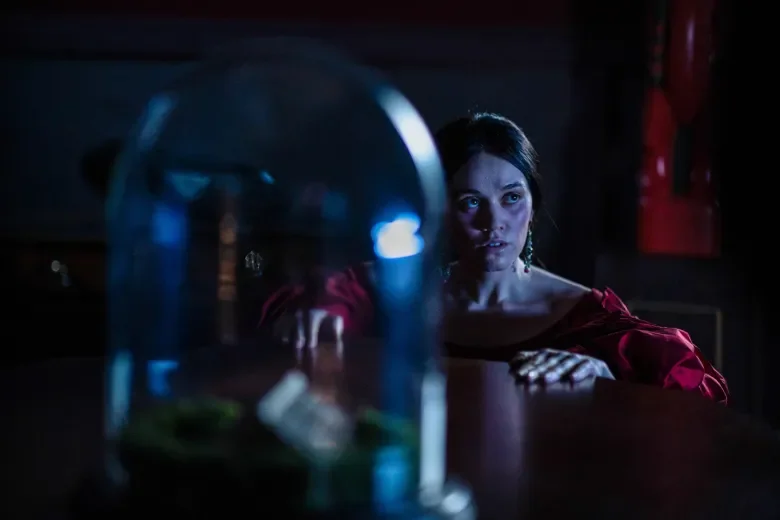
Mārama is a 2026 Māori gothic horror film written and directed by Taratoa Stappard. Set in 1859, the movie follows Mary, a young Māori woman who travels from Aotearoa (New Zealand) to North Yorkshire after receiving a letter promising answers about her family. Instead, she finds herself inside the dark world of Nathaniel Cole, a wealthy whaler with a disturbing obsession with Māori culture.
What begins as a mystery about Mary’s parents slowly becomes a story about stolen identity, colonial violence, cultural theft, and revenge. By the end, Mary discovers the truth about her family and fully embraces her real identity as Mārama.
What Is Mārama About?
Mary arrives in England hoping to learn more about her parents and her whakapapa, or family lineage. The man who summoned her is already dead, leaving her stranded in an unfamiliar country.
She is then offered work as a governess at Hawkser Manor by Nathaniel Cole, a wealthy man who made his fortune through whaling. Cole appears polite and interested in Māori culture, but his beautiful home soon begins to feel like a prison.
The manor contains Māori objects that were taken from their homeland. Cole has even created a private garden containing a wharenui, a traditional Māori meeting house. To Mary, this is not admiration. It is a disturbing display of a culture that has been stolen and turned into decoration.
Mary also begins experiencing strange visions. Whenever she touches certain objects or enters particular parts of the manor, she sees fragments of the past. These visions slowly connect her to the Māori women who came before her.
What Does the Name Mārama Mean?
The title is important because mārama is a Māori word connected with light, clarity, brightness, and understanding. It can also describe something that becomes clear or understandable.
This meaning fits Mary’s journey. At the beginning, she does not understand who she really is or what happened to her family. As the story progresses, the truth becomes clearer. She moves from confusion to knowledge and finally accepts the identity that was taken from her.
The film therefore uses the idea of “light” as a contrast to the darkness surrounding Cole and his crimes. Mārama is not simply Mary’s name. It represents her awakening and her understanding of her own history.
Also Read: The Perfect Lie Season 1 Ending Explained
Who Is Nathaniel Cole?
Nathaniel Cole is much more than a wealthy Englishman with an interest in Māori culture. His fascination is actually part of the horror.
Cole treats Māori culture as something that can be collected, displayed, and controlled. His manor is filled with objects taken from Māori communities, while his private garden contains a Māori meeting house removed from its cultural setting.
As Mary investigates the manor, she discovers that Cole’s connection to her family is far darker than she imagined. He has been involved in the destruction and exploitation of Māori people, particularly Māori women.
The people around Cole also reveal different forms of cultural exploitation. Jack, for example, wears Māori markings and imitates Māori customs, but he does not treat them with the respect they deserve. The film uses these characters to show how colonialism can turn a living culture into something outsiders simply consume.
What Happens to Mary’s Family?
Mary eventually discovers that her real identity has been hidden from her. The name Mary Stevens is part of the identity imposed on her, while Mārama is connected to her Māori ancestry.
Her visions also reveal the fate of the women in her family. Her connection to her twin sister Emilia becomes important as Mary realizes that the manor has been connected to the suffering of her family for generations.
Cole has not simply stolen Māori objects. He has treated Māori people themselves as objects. The murdered women from Mary’s bloodline have effectively become part of his private collection.
This is why the horror in Mārama feels different from a normal haunted-house story. The ghosts and visions are tied to real historical violence. The past is not simply haunting Mary; it is demanding to be remembered.
Why Does Mary Become Mārama?
Mary’s transformation into Mārama is really a transformation in identity.
For much of the movie, Mary tries to survive by keeping quiet and behaving as expected in Cole’s house. She is far from home and surrounded by people who have power over her.
But the visions gradually reconnect her with her ancestors. She begins to understand what happened to the women in her family and why Cole knows so much about her.
The turning point comes during Cole’s party. Instead of allowing her culture to be treated as entertainment, Mārama finally confronts the people around her. Her haka becomes an expression of anger, identity, and resistance.
From this point, she is no longer simply trying to discover the past. She is ready to fight back against the person responsible for destroying it.
Also Read: Vanishing Point Ending Explained
Mārama Ending Explained: What Happens to Nathaniel Cole?
Major spoilers ahead.
Near the end of the movie, Mārama finally turns against Cole. The visions she has experienced throughout the story have prepared her for the truth, and she now understands the connection between Cole, her family, and the violence carried out against Māori women.
Cole’s obsession with whaling becomes especially important in the final confrontation. Throughout the film, images of whale hunting appear around the manor. Cole’s treatment of Māori people mirrors the way he treats whales: as things to hunt, possess, and turn into trophies.
Mārama reverses that symbolism against him.
She attacks Cole with a head spade, a tool associated with cutting apart whales. The weapon connects Cole’s own history as a whaler with his death. Mārama ultimately kills and decapitates him, turning the same brutal imagery that Cole used against others back on him.
The scene is deliberately violent, but it is not violence for its own sake. It represents Mārama refusing to remain another object in Cole’s collection. The hunter finally becomes the hunted.
What Happens to the Māori Women?
One of the most important parts of the ending is what Mārama does after defeating Cole.
The story does not end simply because Cole is dead. His death removes one man, but Mārama still has to confront what happened to her ancestors.
She reclaims the remains of the Māori women connected to her family and returns them to Aotearoa. This is an important act because Cole had taken their bodies and identities away from their homeland and turned them into trophies.
Returning them home restores something that colonial violence had taken from them: their connection to their people and their land.
Why Does Mārama Get Tā Moko?
At the end, Mārama embraces her Māori identity and wears tā moko on her chin.
This is one of the clearest signs that her journey is complete. Earlier, her identity had been hidden, renamed, and controlled by others. Now she openly carries a visible connection to her ancestry.
The ending is therefore not only about revenge. It is about reclaiming an identity that was taken away.
Is Mārama a Ghost Story?
Not in the usual sense.
The movie uses supernatural visions, ancestral voices, disturbing images, and gothic horror to reveal the past. But the real horror comes from the history behind those visions.
Mārama’s experiences can be understood as a connection to her ancestors and to memories that have been buried. The supernatural elements make the history visible rather than turning the movie into a simple story about ghosts.
This is one reason the film is often described as Māori gothic horror. It uses the familiar language of gothic cinema, old houses, secrets, visions, death and darkness, to explore the effects of colonialism on Māori identity and culture.
Also Read: Drawn Together 2026 Movie Ending Explained
What Does the Ending of Mārama Mean?
The ending means that Mārama has finally taken control of the story that was written for her by other people.
Cole tried to turn Māori culture into something he could own. He collected objects, copied traditions, and treated people as specimens. Mary was also brought into this system, but she eventually breaks free from it.
Her revenge is important, but the film’s final message goes beyond killing Cole. Mārama remembers her ancestors, returns the murdered women to Aotearoa, and accepts her Māori identity.
That is why the title’s connection to light and understanding matters. Mary begins the film searching for answers. She ends it knowing who she is.
The Meaning of the Whale Symbolism
The whale imagery is one of the strongest symbols in the movie.
Cole made his wealth through whaling, and his house contains images connected to the violent industry. Whales are hunted, killed, cut apart, and turned into valuable products. Cole treats Māori culture in a similar way: he takes what he wants and turns it into something he can possess.
Mārama’s final attack reverses that relationship. By using a tool connected to whale hunting against Cole, the film makes him experience the same brutal logic he imposed on others.
The symbolism is simple but effective: the colonizer who treated people like trophies becomes the final trophy of his own violent world.
Also Read: Tune In to the Midnight Heart Season 2 Release Date Confirmed
| Information | Details |
|---|---|
| Movie | Mārama |
| Year | 2026 |
| Director | Taratoa Stappard |
| Writer | Taratoa Stappard |
| Genre | Gothic Horror, Mystery, Thriller, Drama |
| Main Character | Mary / Mārama |
| Mary Played By | Ariāna Osborne |
| Nathaniel Cole Played By | Toby Stephens |
| Peggy Played By | Umi Myers |
| Setting | North Yorkshire, England, 1859 |
| Original Languages | English and Māori |
| Runtime | About 89 minutes |
| Central Theme | Māori identity, ancestry, colonialism and cultural theft |
| Ending | Mārama kills Nathaniel Cole and reclaims her Māori identity and ancestry |
Nathaniel Cole is a wealthy English whaler who has a disturbing obsession with Māori culture. He collects Māori objects and treats the culture and people as things he can possess.
Marama confronts Cole after discovering the truth about his crimes. She kills him with a head spade, a tool connected to his whaling business. His death also reverses the hunter-and-prey relationship that defines his character.
No. Mary survives the events of the film. By the end, she has fully embraced her Māori identity and becomes Mārama.
Mary’s journey reveals that the identity she has been living under does not tell the whole story of who she is. After reconnecting with her ancestors and learning the truth about her family, she accepts her Māori identity and begins living as Mārama.