
Spoiler Warning: This article contains major spoilers for Netflix’s UNABOMBER (2026).
Netflix’s UNABOMBER does not end with a simple detective-story reveal. The film spends much of its 1 hour and 40 minutes moving between two different periods in Ted Kaczynski’s life: his years as a young Harvard student and the FBI’s long search for the man behind the Unabomber attacks.
That structure is important because the ending connects both timelines. Young Ted is shown being deeply affected by controversial psychological experiments, while the older Ted is finally exposed because of the very thing he used to explain his beliefs to the world: his writing.
How Was Ted Kaczynski Caught?
The FBI did not discover Ted Kaczynski through one dramatic piece of physical evidence. His capture came after years of investigation, and the biggest breakthrough was connected to the Unabomber’s manifesto.
In the film, FBI agent Joanne Miller becomes convinced that the Unabomber’s writings contain the key to his identity. She believes investigators should study the man’s ideas and writing style instead of relying only on conventional criminal profiling.
The FBI eventually agrees to publish the Unabomber’s lengthy manifesto. That decision changes the investigation.
After the manifesto becomes public, Ted’s brother David Kaczynski and David’s wife Linda recognize similarities between the writing and material associated with Ted. David eventually gives investigators documents written by his brother.
The similarities in language, sentence structure and ideas become an important part of the case. What Ted intended as a statement of his beliefs has effectively left behind a fingerprint.
Historically, this was one of the major breakthroughs in the real Unabomber investigation. The FBI’s linguistic analysis found a strong connection between the manifesto and documents supplied by David Kaczynski. That evidence helped investigators obtain a search warrant.
What Happens at Ted Kaczynski’s Cabin?
Once investigators have enough evidence, attention turns toward Ted’s isolated cabin near Lincoln, Montana.
The cabin had helped Kaczynski remain hidden from society for years. But by this point, his isolation could no longer protect him. The FBI knows who it is looking for and where he is living.
The film cuts between the FBI moving toward the cabin and scenes from Ted’s younger years. This editing gives the arrest a deeper meaning: the manhunt is ending at exactly the moment the film returns to the experiences that it suggests helped shape his worldview.
On April 3, 1996, federal agents arrested Kaczynski at his Montana cabin. The FBI search uncovered bomb-making materials, thousands of pages of handwritten material and a live bomb.
The real investigation had finally reached its end after nearly two decades.
Why Does Joanne Cry After Ted Is Captured?
One of the film’s quieter moments comes after Kaczynski’s arrest, when Joanne Miller returns to the office and breaks down in tears.
Her reaction is not simply happiness because the case has been solved. She has spent much of the story fighting to have her interpretation of the evidence taken seriously. When Kaczynski is finally captured, the pressure of the investigation appears to catch up with her.
There is also a larger reason for the scene. The arrest may close the investigation, but it cannot undo what happened. The Unabomber campaign killed three people and injured more than 20 others.
So the ending does not present the arrest as a victory that fixes everything. The FBI has its answer, but the damage caused by Kaczynski’s actions remains.
Also Read: Made in Korea Season 2 Ending Explained
What Happens to Young Ted at the End?
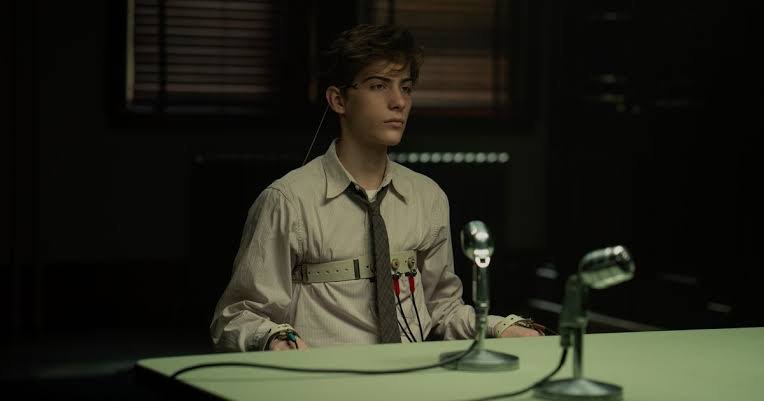
The film then returns to the Harvard timeline, where young Ted is still dealing with Professor Henry Murray’s controversial experiments.
At first, Ted believes the debates and psychological exercises are an intellectual challenge. He expects to exchange ideas and prove his arguments. Instead, he discovers that the people around him have been studying his reactions under extreme psychological pressure.
Murray and Christiana Morgan use information Ted has shared with them against him during the experiments. Ted feels deceived and humiliated.
This becomes one of the most important moments in the film because it changes how Ted sees authority, privacy and intellectual debate. The movie suggests that his experience at Harvard contributes to his growing distrust of society.
However, the film does not establish that the Harvard experiment directly caused Kaczynski to become the Unabomber. That would be too simple, and the real history is far more complicated.
What Was the Henry Murray Experiment?
The Henry Murray storyline is based on a real part of Ted Kaczynski’s life. Kaczynski attended Harvard as a teenager and participated in psychological experiments conducted by Murray.
The film takes those real events and builds a dramatic relationship between young Ted and Murray. Their relationship is central to the movie’s explanation of Ted’s transformation.
But viewers should be careful about treating every scene between the two men as historical fact. Netflix’s own filmmakers acknowledge that the specific relationship shown in the movie is largely dramatized. The real historical record confirms Kaczynski’s participation in Murray’s experiments, but there is no evidence for every personal confrontation portrayed in the film.
That distinction matters because UNABOMBER is a drama inspired by true events, not a documentary.
Also Read: Minerva Academy Season 1 Ending Explained
Is Joanne Miller a Real FBI Agent?
No. Joanne Miller, played by Shailene Woodley, is a fictional character.
She represents the investigators who worked on the real Unabomber case rather than being a direct portrayal of one specific FBI agent. The film uses her as its main connection to the FBI investigation and gives her the role of pushing the theory that the Unabomber’s manifesto could reveal his identity.
The larger investigation, however, was real. The FBI and its partners spent years trying to identify the bomber, and the publication of the manifesto eventually helped bring David Kaczynski forward.
What Does the Ending Really Mean?
The ending of UNABOMBER is less about saying that one event created Ted Kaczynski and more about showing how ideas can become dangerous when someone becomes completely convinced that only their own interpretation of the world is correct.
Young Ted is obsessed with arguments, logic and proving his ideas. Years later, the older Kaczynski uses writing to persuade people to accept his views about technology and modern society.
The film creates a disturbing connection between those two versions of Ted. The young student wants his ideas to be heard. The older man becomes willing to use violence to force society to listen.
That does not excuse Kaczynski’s crimes. The film itself makes that distinction clear. Whatever happened to him during his youth, the decision to murder and injure innocent people was his own.
The ending is therefore tragic rather than triumphant. The FBI catches the Unabomber, but the film leaves viewers thinking about how isolation, obsession and absolute certainty can grow into something much darker.
Also Read: The Love Hypothesis 2026 Recap and Explained
What Does “UNABOMBER” Mean?
The name UNABOM came from the FBI’s original case code for the bomber. It referred to his attacks involving UNiversity and Airline BOMbing targets.
The media later turned the name into “Unabomber,” which became the label most commonly associated with Ted Kaczynski.
How Much of UNABOMBER Is True?
The basic story is real. Ted Kaczynski was a mathematical prodigy who attended Harvard as a teenager. He participated in psychological experiments led by Henry Murray. He later carried out a bombing campaign that lasted roughly 17 years, and the FBI spent years trying to identify him.
The breakthrough involving his manifesto and brother David is also based on real events. Kaczynski was ultimately arrested at his Montana cabin in 1996.
Where the movie takes greater creative freedom is in the personal relationships and the FBI characters. Joanne Miller is fictional and the film’s detailed portrayal of Ted’s relationship with Murray is dramatized.
Also Read: Youth Season 1 Episode 1 Recap
| Information | Details |
|---|---|
| Movie | UNABOMBER |
| Year | 2026 |
| Director | Janus Metz |
| Young Ted Kaczynski | Jacob Tremblay |
| Henry Murray | Russell Crowe |
| Joanne Miller | Shailene Woodley |
| Christiana Morgan | Annabelle Wallis |
| Runtime | 1 hour 40 minutes |
| Story | Inspired by the true story of Ted Kaczynski and the FBI’s Unabomber investigation |
| Major breakthrough | Publication of the Unabomber manifesto led David Kaczynski to recognize similarities in Ted’s writings |
| Arrest | April 3, 1996 |
| Location of arrest | Kaczynski’s cabin near Lincoln, Montana |
| Joanne Miller | Fictional FBI character created for the film |
| Central theme | How isolation, ideas and extreme certainty can lead a person toward destructive choices |
Ted Kaczynski was arrested on April 3, 1996, at his isolated cabin near Lincoln, Montana.
Yes. Kaczynski lived alone in a small cabin near Lincoln, Montana, where he carried out much of his work and remained hidden from investigators for years.
No. Joanne Miller, played by Shailene Woodley in UNABOMBER, is a fictional character created for the film. She represents aspects of the real FBI investigation rather than portraying one specific agent.
Yes. Kaczynski participated in psychological experiments conducted by Harvard professor Henry Murray while he was a student. However, the film dramatizes parts of their relationship and should not be treated as a completely factual account.